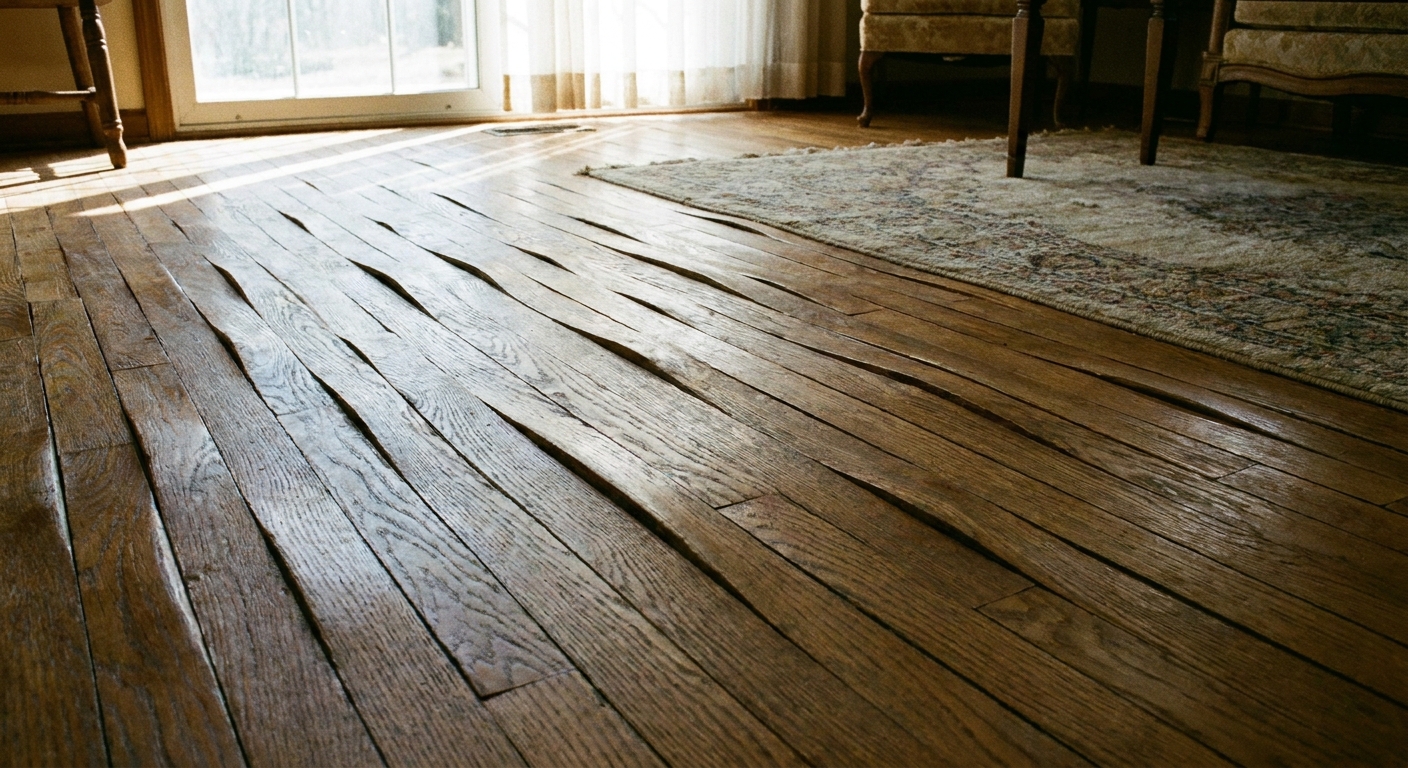
Board edges higher than the middle? That is cupping. Here is how to spot it, find the moisture source, dry it out safely, and decide between sanding or repla...
The Grout Nest
Published
Winter Gaps Between Hardwood Boards: What Is Normal and What to Fix
Seeing gaps between hardwood boards in winter? Learn what’s normal seasonal shrinkage, the ideal indoor humidity range, when gaps close again, and when it’s time to repair.

Ben Mitchell
Ben Mitchell is a former professional tile setter and passionate home renovator with over 12 years of experience in the flooring industry. After stepping away from commercial contracting, he founded Grout Nest to empower everyday homeowners to tackle their own flooring, tile, and backsplash projects with confidence. He believes that with the right tools, proper prep work, and a little patience, anyone can achieve a professional-grade finish.
The first winter in our 1970s fixer upper, I walked into the living room with my coffee and thought I’d lost my mind. There were neat little lines between the oak boards that absolutely were not there in September. I did what any former tile guy does when confronted with wood behavior. I stared at it like it was grout that had betrayed me.
Here’s the good news. A lot of winter gaps in solid hardwood are normal. Wood is hygroscopic, which is a fancy way of saying it breathes with your house. The trick is knowing when to leave it alone, when to control your indoor climate, and when a gap is telling you something is actually wrong.
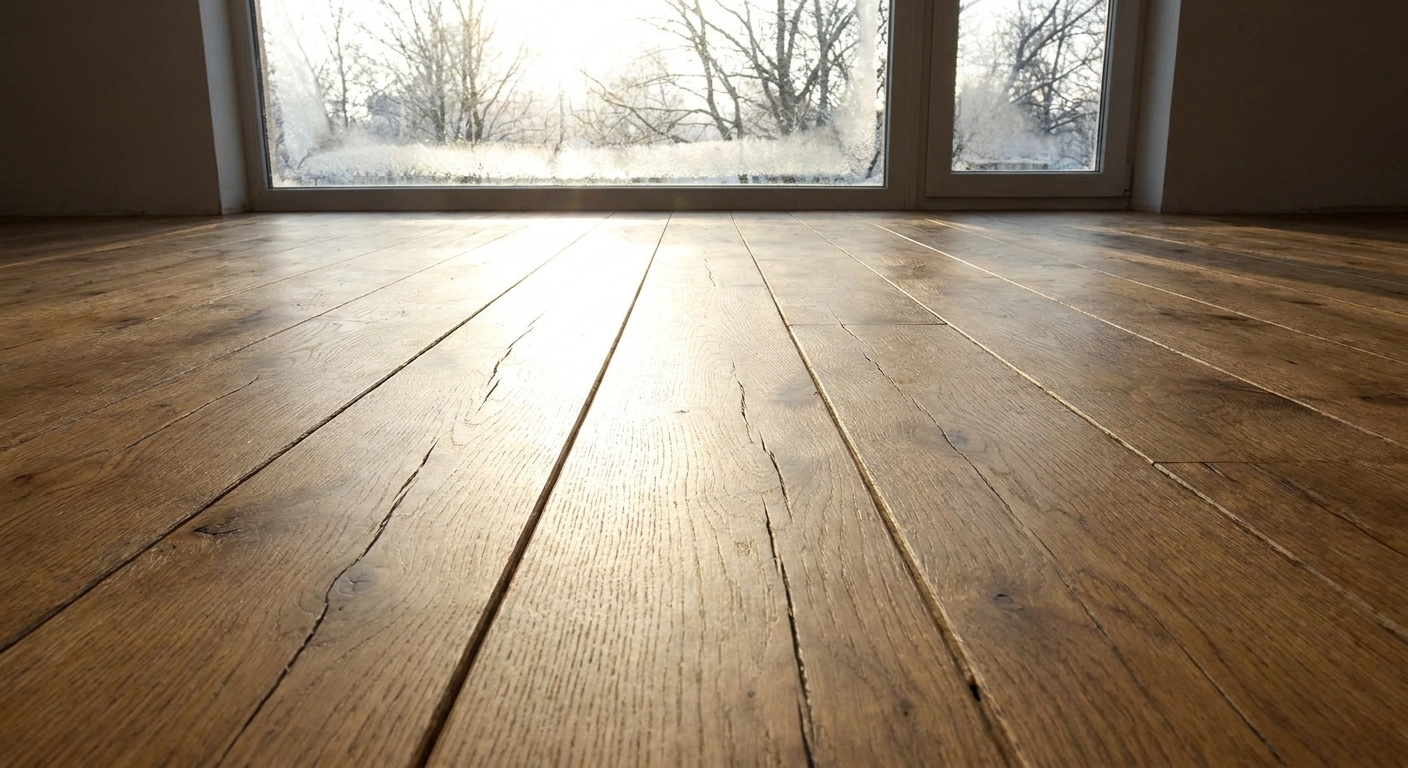
Why hardwood gaps show up in winter
Solid hardwood expands when it takes on moisture and shrinks when it dries out. In most climates, winter indoor air is much drier because:
- Cold outside air holds less moisture. When that air gets heated indoors, relative humidity drops.
- Furnaces, baseboard heat, and wood stoves dry the air. Even if you have a humid climate outdoors, the heated indoor air can be desert dry.
- Wood responds mostly across its width. The boards do not get shorter in a meaningful way. They get narrower, so you see gaps between boards.
If you have solid hardwood, some seasonal movement is expected. Even many engineered wood floors show a little movement, just usually less than solid.
What’s a normal amount of gapping?
There is no single magic number because species, board width, cut (plain-sawn vs rift and quarter-sawn), and your home’s humidity swings all matter. But here’s a practical way to judge it in the real world:
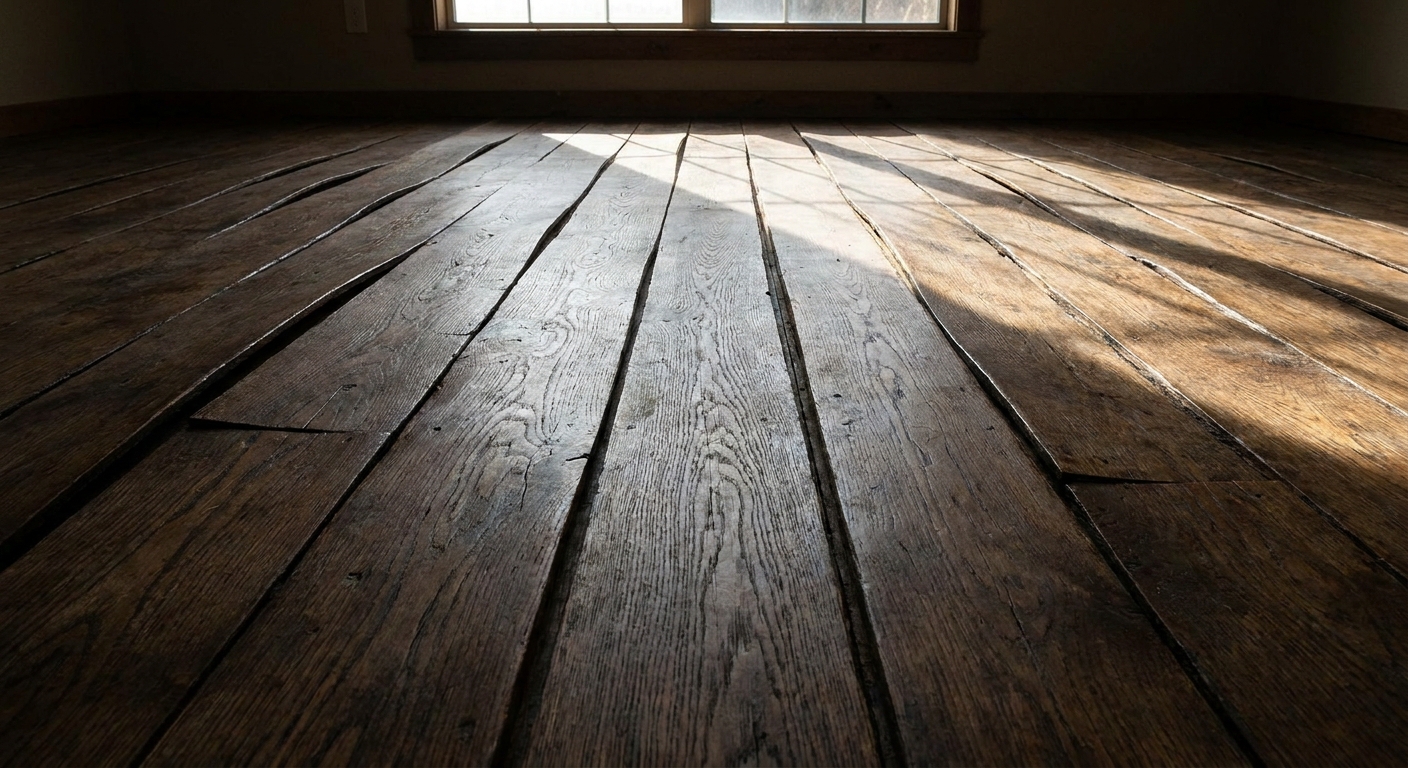
- Hairline gaps you notice only at certain angles are typically normal seasonal shrinkage.
- Small, consistent gaps that run the length of many boards can still be normal if they appear in winter and mostly disappear in summer.
- Wide gaps you can catch with a sock toe, gaps that keep growing year after year, or gaps that show up randomly in patches often deserve a closer look.
My rule of thumb: if the gaps largely close back up when the humid season returns, your floor is doing what wood does. If they do not close, or if boards start shifting and edges get beat up, it is time to intervene.
Humidity range to aim for
If you want fewer winter gaps, the fix is usually not filler. It is moisture control.
Target an indoor relative humidity of about 35 to 55 percent year round, with 40 to 50 percent being a sweet spot for many homes. Try to avoid long stretches below 30 percent in winter, which is where gapping complaints really take off.
A few practical tips that actually work:
- Buy a cheap hygrometer. Do not guess. Measure in the rooms with hardwood.
- Use a humidifier in winter. Whole-house units are ideal, but a quality room humidifier can make a big difference in a bedroom or living room.
- Run bathroom and range fans only as needed. Over-ventilating in winter can dry the house faster.
- Keep temperature swings reasonable. Blasting heat all day then letting the house drop hard at night can exaggerate drying.
If you add humidity, go slowly and monitor. Overshooting humidity for weeks can create its own problems, especially if you have a crawlspace or basement moisture issue.
When gaps close again
In a typical seasonal cycle, gaps start to appear after the heating season kicks in and indoor humidity drops, often late fall through winter. They usually tighten up again in spring and summer as humidity rises.
That is why a lot of pros recommend waiting a full year before doing cosmetic repairs on a hardwood floor in a new-to-you house. You want to see the whole movement cycle before you start “fixing” something that is self-correcting.
Gapping vs cupping
Gapping is about boards shrinking in width. Cupping is about boards changing shape, where the edges curl up higher than the center.
Signs it is seasonal shrinkage
- Gaps are the main symptom.
- Board faces are still relatively flat.
- Issues are worst in winter and improve in summer.
Signs it might be moisture imbalance
- Edges feel raised, like little ridges along board sides.
- The floor looks wavy across multiple boards.
- Symptoms are worse during humid months, or after a leak, or near a damp crawlspace.
If you have both gapping and cupping at different times of year, that is often a clue your home is swinging too far dry in winter and too far humid in summer. That is a humidity management problem first, not a filler problem.
When not to use wood filler
This is the part where I save you from a classic DIY regret.
If your gaps are seasonal, packing them with rigid filler in the dry season can backfire hard. When summer humidity returns, the boards expand. If the filler does not compress or crumble out, the wood has nowhere to go. That pressure can lead to:
- Compression ridges along seams
- Boards pushing up and developing humps
- Buckling in severe cases, especially if expansion space at the walls is already tight
I have seen homeowners chase winter gaps with filler year after year and end up creating a floor that feels lumpy in July. Wood wins that fight.
When filler makes sense
Filler makes sense when the gap is not seasonal or when it is small enough that seasonal movement is minimal, for example after a repair or in a spot where boards were cut and fit poorly.
Filler is usually OK when:
- Gaps are stable year round and do not noticeably open and close.
- You are dealing with tiny surface checks or nail holes during refinishing.
- A board was replaced and the seam needs cosmetic blending during a sand and refinish.
Pick the right product
- During refinishing: a quality trowelable wood floor filler is common because it gets sanded flush and finished over.
- For a single stubborn gap that stays put: a color-matched, flexible gap filler designed for wood floors can be better than a brittle putty.
If you are not sanding and refinishing, be cautious. Many fillers look acceptable for a month, then crack, pop, or collect grime in a way that draws your eye every time sunlight hits the floor.
When repair beats filler
Sometimes a “gap” is not shrinkage at all. It is movement, damage, or a broken tongue-and-groove connection. In those cases, you fix the cause, not the symptom.
Consider a pro or a bigger repair if:
- Gaps are localized in one area, especially near an exterior door, dishwasher, fridge water line, or radiator. That can point to a leak or subfloor moisture problem.
- Boards are shifting up and down when you step near the seam. That suggests fastener failure or subfloor issues.
- The tongue or groove is damaged, causing boards to separate and stay separated.
- You see splintering or crushed edges that keep getting worse from foot traffic.
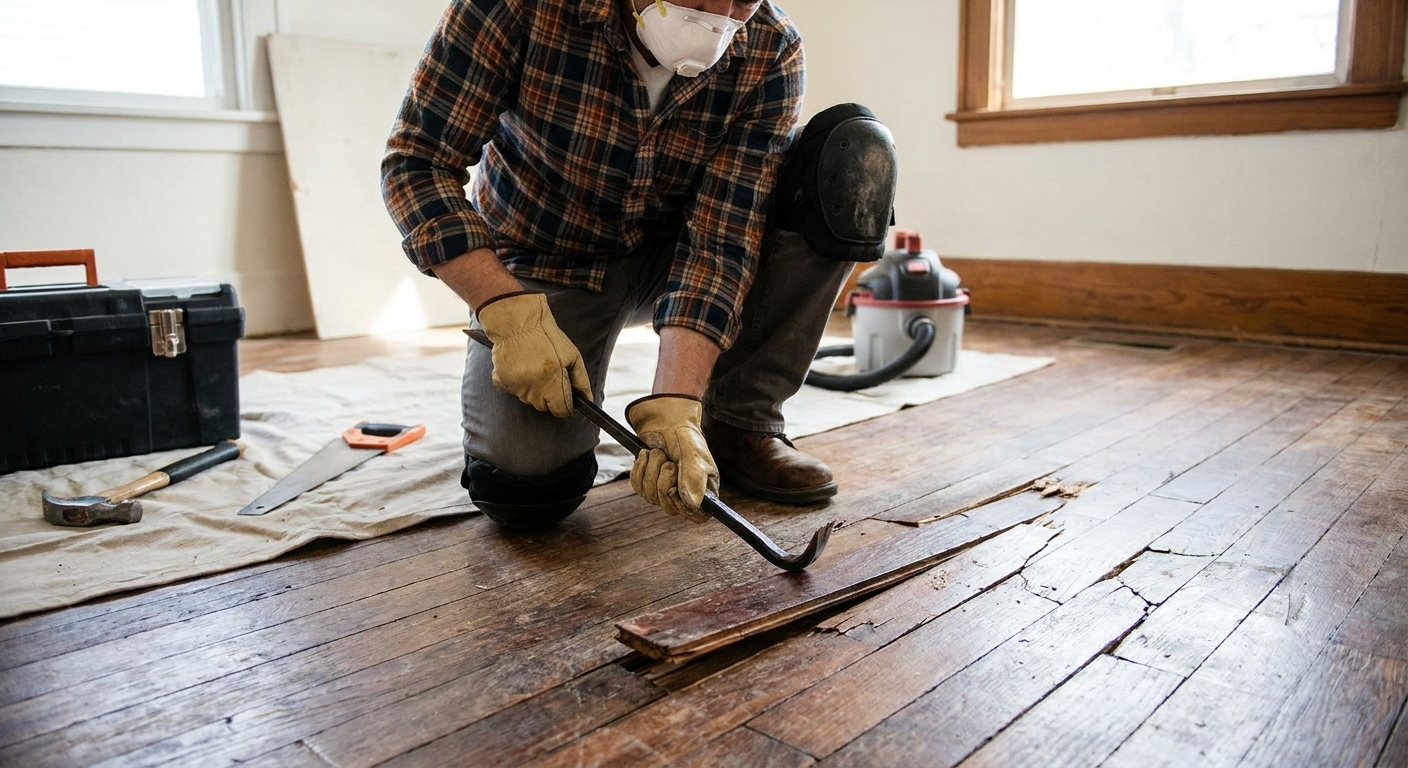
A single damaged board can often be replaced without redoing the whole room, but matching stain and sheen can take patience. If you have leftover boards from the original install, that is the golden ticket.
Quick checks you can do today
1) Measure humidity
Drop a hygrometer in the problem room for a day. If you are living at 20 to 30 percent RH in winter, the gaps are very likely seasonal shrinkage.
2) Look for a pattern
Are gaps fairly consistent throughout the room, or only in one strip near a window or exterior wall? Consistent points to overall dry air. Localized points to a localized cause.
3) Check for movement and sound
Walk across the gaps. If boards click, flex, or feel loose, you may have subfloor or fastening issues that are separate from normal seasonal change.
4) Inspect the perimeter
If you can, pull a floor vent cover or peek at the edge under baseboard shoe molding. Hardwood needs expansion space. If the floor was installed tight to the walls, seasonal swelling can cause buckling later.
FAQ
Are winter gaps normal in solid hardwood?
Yes, within reason. Small to moderate gaps that show up in winter and mostly close in summer are a normal response to drier indoor air.
Will the gaps go away on their own?
If they are seasonal, they often tighten up when indoor humidity rises in spring and summer. Controlling humidity reduces how dramatic the cycle feels.
Should I run a humidifier for my hardwood floors?
If your winter indoor humidity is routinely below about 30 to 35 percent, a humidifier is one of the most effective ways to reduce gapping and keep the floor more stable.
Can I just fill the gaps with wood putty?
Not if the gaps are seasonal. Filling a winter gap can create buckling or ridging when the boards expand again. Save filler for stable, year-round gaps or refinishing work.
What if my floor has gaps in winter and cupping in summer?
That usually means your home swings too dry in winter and too humid in summer. The long-term fix is to narrow that swing with humidification in winter, dehumidification or moisture control in summer, and checking crawlspaces or basements for moisture problems.
The bottom line
Most winter gaps in solid hardwood are a humidity story, not a flooring failure. Aim for roughly 35 to 55 percent indoor relative humidity, watch whether the gaps close back up when seasons change, and resist the urge to pack seasonal gaps with filler. If gaps are wide, localized, worsening, or paired with loose boards or moisture signs, treat it like a diagnostic problem and fix the cause before you fix the seam.
If you want, tell me what type of hardwood you have, your board width, and your winter indoor humidity reading. Those three details narrow down what “normal” looks like in your house fast.