A practical, DIY-focused breakdown of LVP versus laminate, including waterproof claims, wear layers, subfloor prep, comfort, and where each option makes the ...
The Grout Nest
Updated October 17, 2026
Best Pet-Friendly Flooring for Dogs and Cats
From waterproof vinyl to scratch-resistant tile, here are the best pet-friendly flooring options for dogs and cats, plus what to avoid and how to choose the right one.

Ben Mitchell
Ben Mitchell is a former professional tile setter and passionate home renovator with over 12 years of experience in the flooring industry. After stepping away from commercial contracting, he founded Grout Nest to empower everyday homeowners to tackle their own flooring, tile, and backsplash projects with confidence. He believes that with the right tools, proper prep work, and a little patience, anyone can achieve a professional-grade finish.
If you share your home with a dog, a cat, or both, your floor is basically a daily stress test. Claws, zoomies, litter scatter, water bowl splashes, the occasional accident, and that one spot by the window where everyone insists on napping. The goal is not “indestructible” flooring. It is flooring that forgives real life, cleans up fast, and still looks good five years from now.
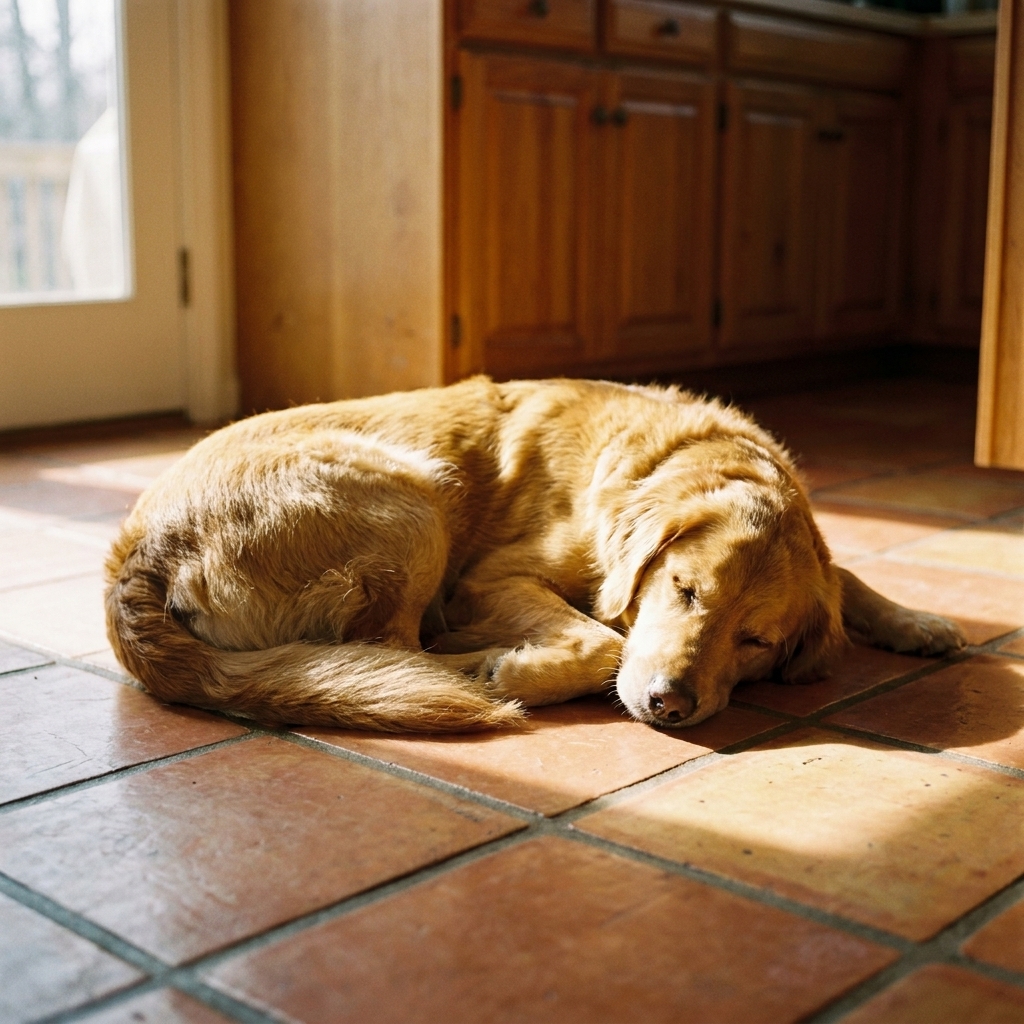
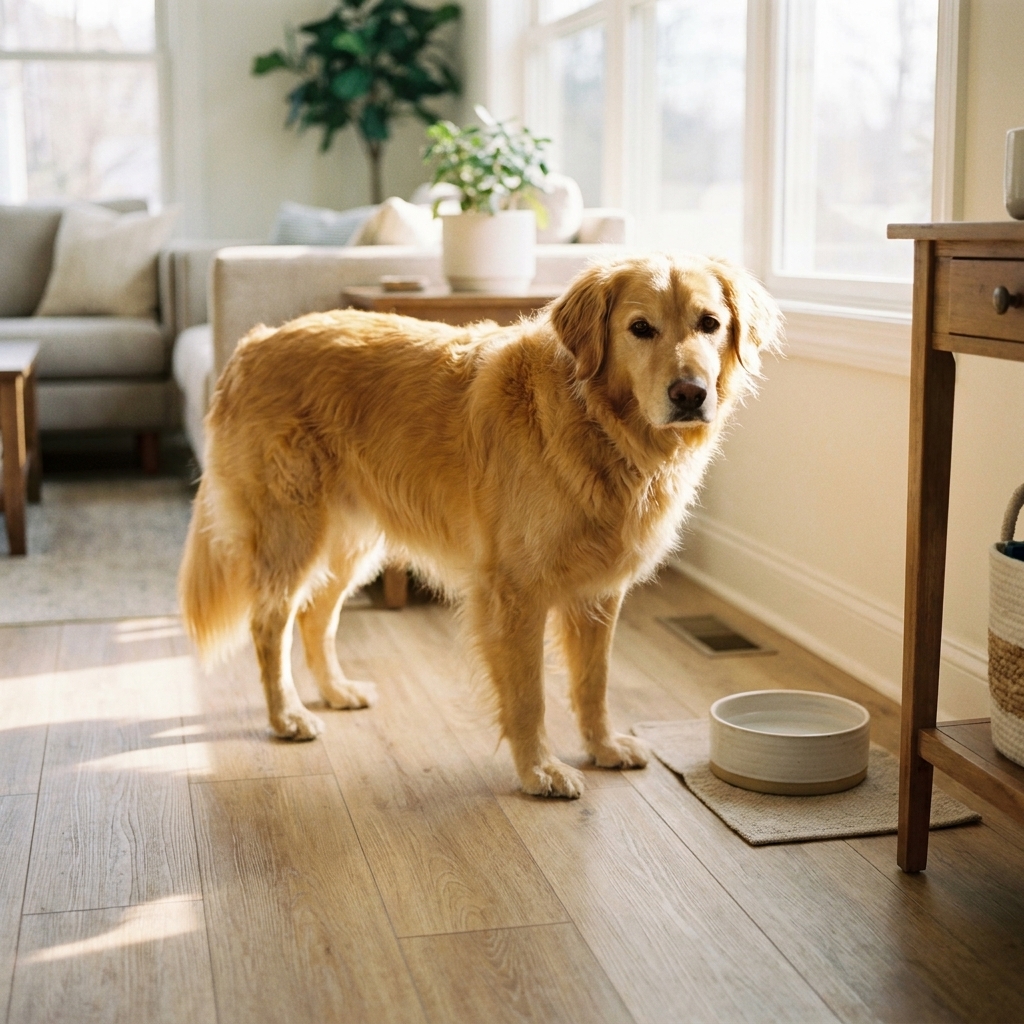
I set tile professionally for over a decade, and now I’m the guy trying to keep my golden retriever, Barnaby, from skating across freshly sealed floors like a cartoon. Here are the pet-friendly flooring options I recommend most, what to skip, and how to choose based on your pets and your house.
What makes flooring truly pet-friendly
Marketing terms are cute. Your pets are not. Here’s what actually matters when you are choosing a floor that can take daily pet traffic.
- Scratch resistance: No floor is scratch-proof, but some hide wear far better than others. Texture and pattern matter as much as the wear layer.
- Waterproof or water-resistant: Accidents happen. So do knocked-over bowls and wet paws. The best pet floors do not swell, cup, or trap moisture underneath.
- Traction: Super slick floors can be tough on older dogs and can cause cats to slide when they launch into full goblin mode at 2 a.m. Matte and textured finishes help, and if you are shopping tile, check DCOF or COF ratings when they are provided.
- Stain resistance and cleanability: Think urine, vomit, muddy paws, and that mysterious sticky spot you notice only when the sun hits it just right.
- Noise: Click-clack claws on a hard floor can get old fast. Underlayment and the right material can help.
- Repairability: If something does get damaged, can you replace a plank or tile, or are you redoing the whole room?
Ben’s rule: Prep work is 90% of the job, and with pet-friendly floors, that includes picking a surface that matches your pets’ habits. A “great” floor installed in the wrong home becomes a “bad” floor fast.
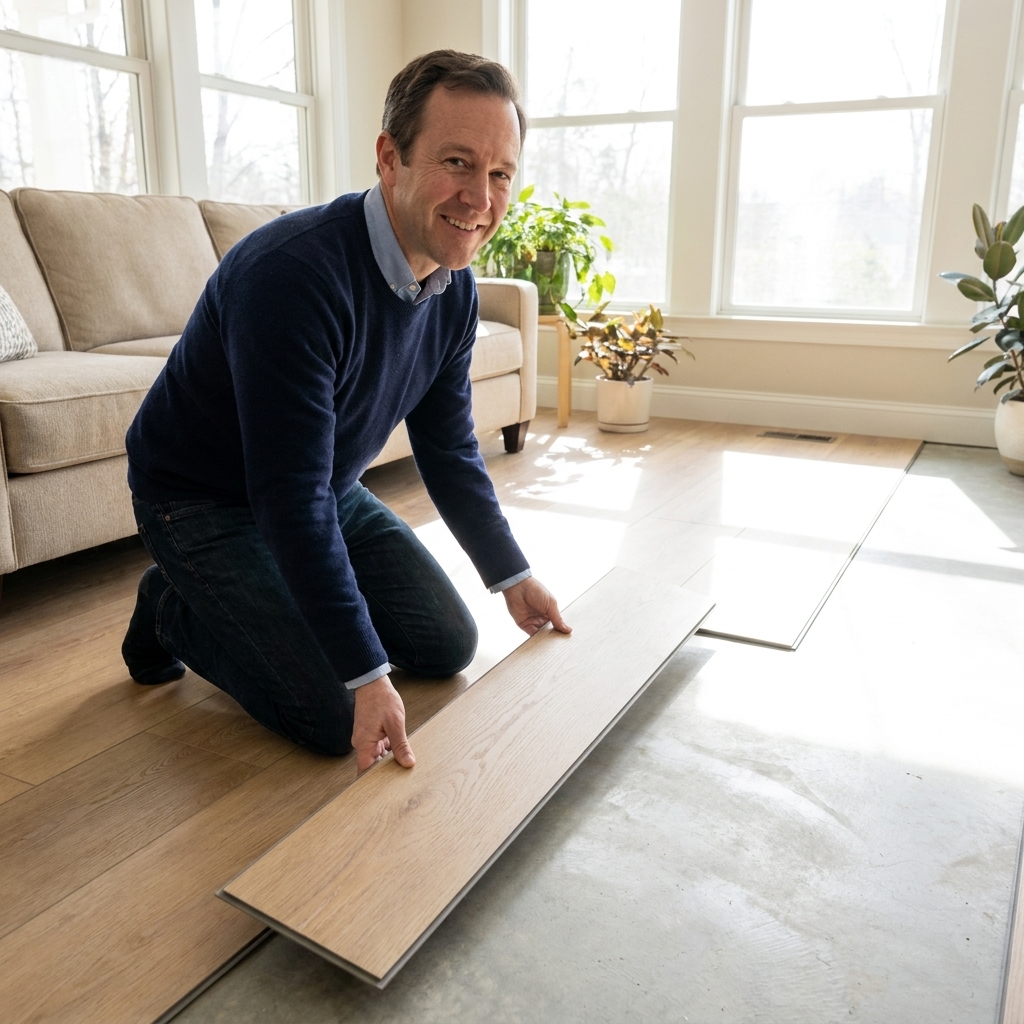
Best overall: Luxury vinyl plank (LVP) and luxury vinyl tile (LVT)
If you want a pet-friendly floor that hits the sweet spot of durability, water resistance, comfort underfoot, and DIY friendliness, LVP is hard to beat.
Why it works for pets
- Water-resistant to waterproof options are common: Many rigid-core LVP products (SPC or WPC) handle surface spills well when you clean them up promptly. The seams are still the critical point, so do not let water linger.
- Good scratch hiding: A matte finish with realistic wood grain texture hides micro-scratches better than glossy surfaces.
- Warmer and quieter than tile: Great for pets who like to sprawl.
- Replaceable planks in many installations: With most floating click-lock floors, you can often swap a damaged plank. Just know it can mean unclicking rows back to the problem spot. Glue-down LVT is a different story.
What to look for when buying
- Wear layer: Aim for 20 mil in busy pet homes if budget allows. 12 mil can be fine for lighter traffic, but big dogs and long nails are not “light traffic.”
- Textured, matte finish: Better traction and better scratch camouflage.
- Rigid core: SPC or WPC cores help resist dents and minor subfloor imperfections. That said, vinyl can still dent under heavy furniture or concentrated loads, so use wide felt pads and be careful dragging crates.
- Beveled edges: They can help disguise minor height differences, but keep spills cleaned up so liquid does not linger at seams.
Installation notes (DIY-friendly)
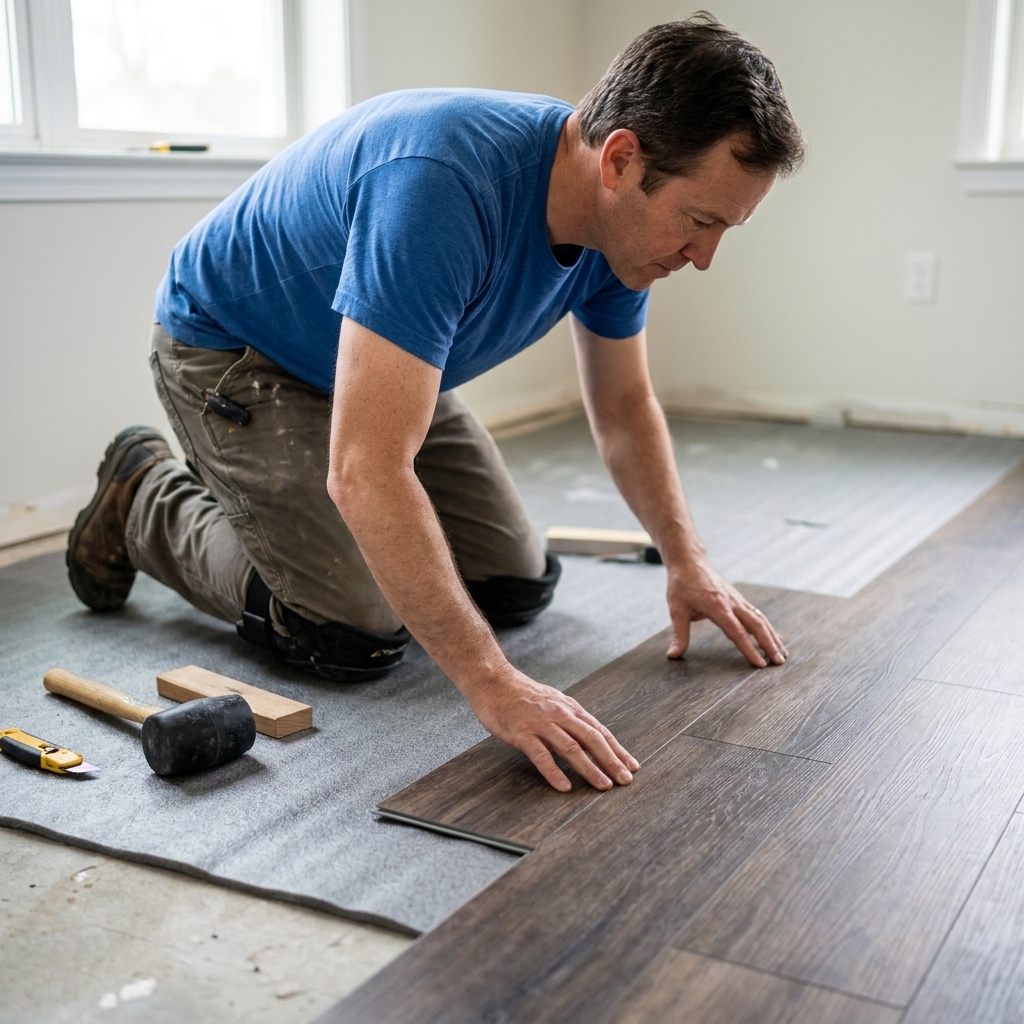
Click-lock LVP is very DIYable, but don’t skip subfloor flatness. High spots create flex, flex breaks joints, and broken joints invite moisture. Most manufacturers want something like 3/16 inch over 10 feet flatness, and many also cite 1/8 inch over 6 feet. Check your specific product.
One more warranty gotcha: a lot of LVP comes with an attached pad. Adding extra underlayment can make the floor feel softer, but it can also create too much deflection and void warranties. Follow the manufacturer’s system, not your instincts.
Most durable for messes: Porcelain tile
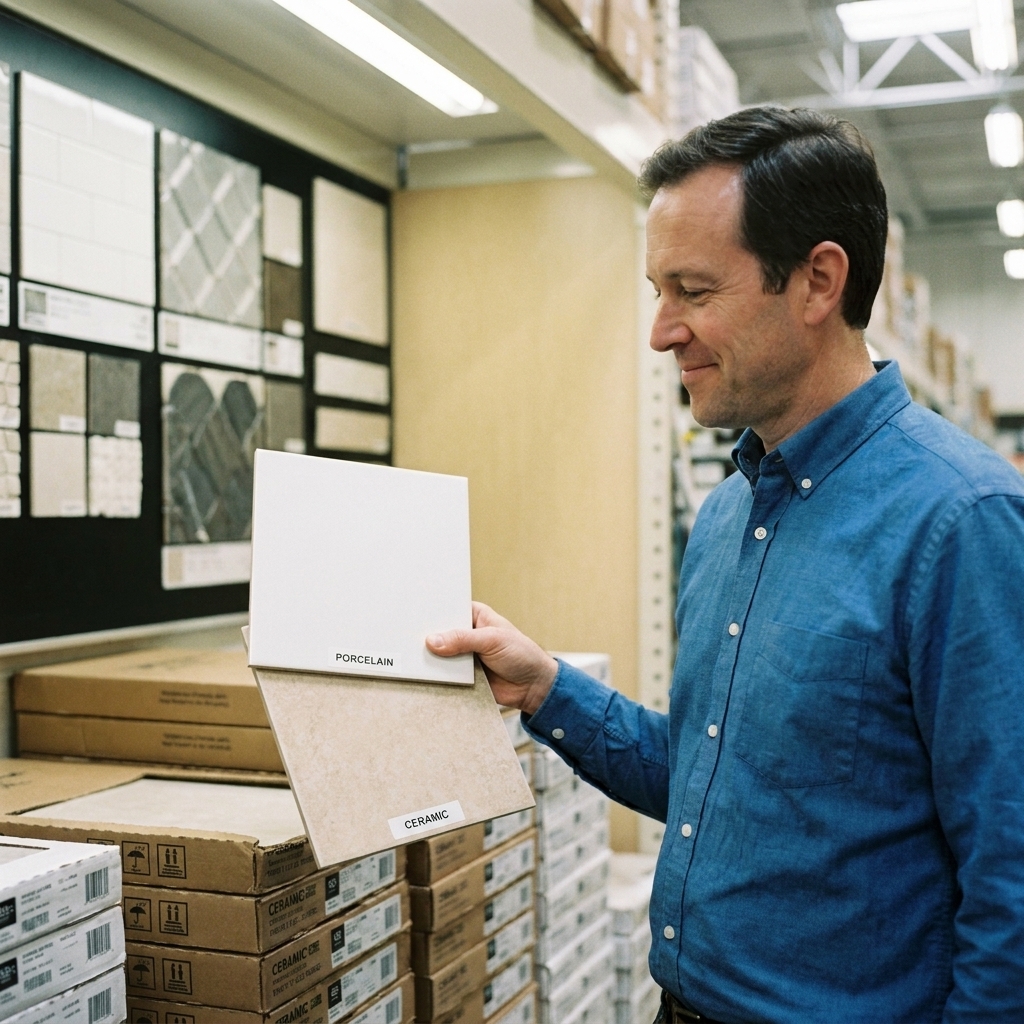
When someone tells me they want a floor that laughs at pet messes, porcelain tile is the material I trust most. It is dense, hard, and basically indifferent to water at the surface.
Why it works for pets
- Excellent scratch resistance: Porcelain is extremely hard. Claws are not the issue here.
- Handles wet messes with ease: Mud, accidents, spilled bowls, litter box misses. Tile cleans up well. Just remember grout is not automatically waterproof, and waterproofing membranes are a separate decision (usually for true wet areas).
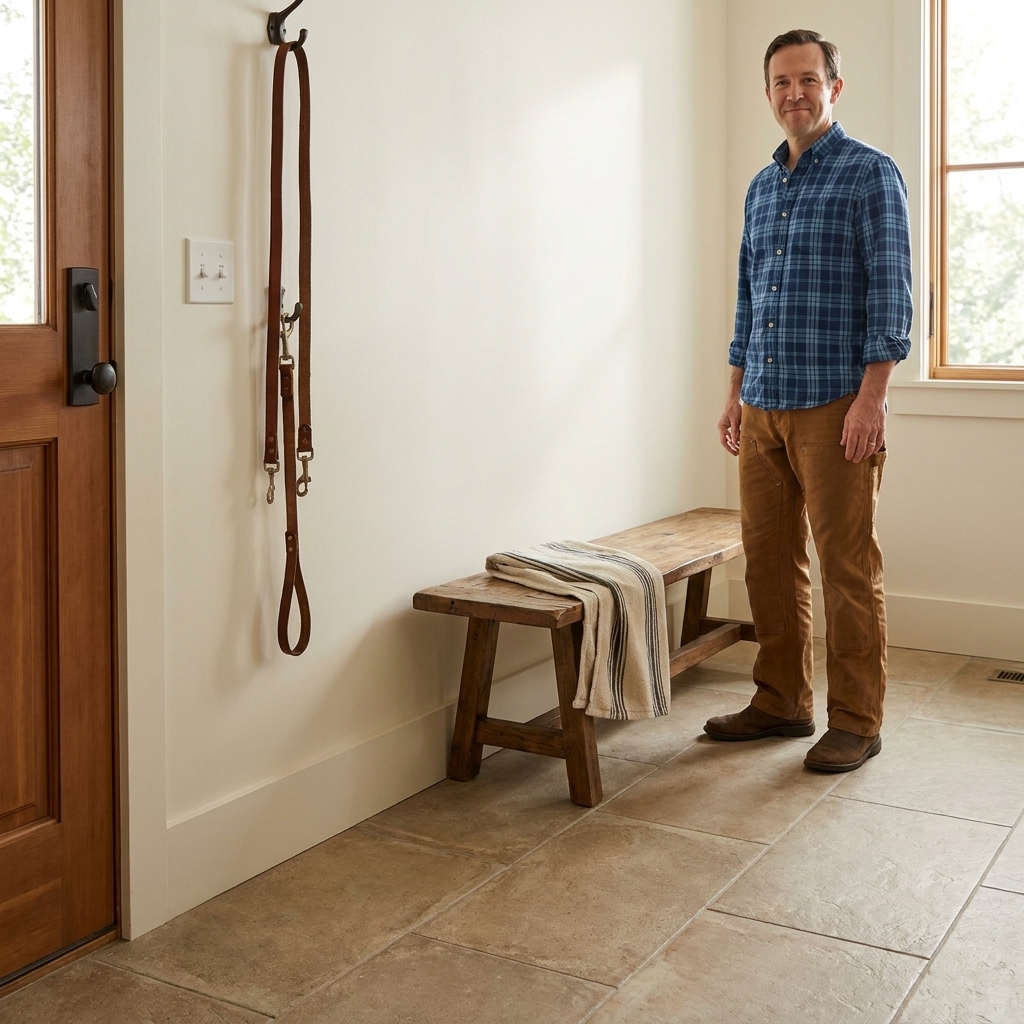
- Best for high-traffic entries and mudrooms: Where the mess begins.
Tile pitfalls in pet homes
- Slippery finishes: Polished tile can be slick. Look for matte or textured finishes with better traction, and consider DCOF/COF ratings when available.
- Grout maintenance: Grout is the weak link. Choose the right grout and seal where needed.
- Hard and cold: Great for cleaning, not always great for naps. Area rugs and pet beds solve most of this.
- Impact damage is real: Tile is tough, but not unbreakable. Drop a heavy pan just right and you can chip a corner. Proper underlayment and an uncoupling membrane help the system perform as designed.
Grout choices I like around pets
- Epoxy grout: Excellent stain resistance and very low maintenance, but more expensive and less forgiving to install.
- High-performance cement grout: A solid middle ground. Use a quality sealer if recommended by the manufacturer.
- Darker grout colors: They hide “life happens” better than bright white.
Best for comfort and quiet: Cork flooring
Cork is one of my favorite “surprisingly good” pet floors for the right household. It is comfortable, warmer than tile, and naturally helps with sound. It can work great with pets, but only if you respect its limits.
Why it can be pet-friendly
- Soft and quiet: Less click-clack and easier on joints.
- Good traction: Many cork finishes are naturally less slippery.
- Hides crumbs and hair: The visual texture is forgiving.
Where cork struggles
- Standing water: Cork does not love repeated soaking. Some modern cork products have more water-resistant cores and tougher finishes, but seams are still the danger zone. Clean up accidents quickly.
- Dents and gouges: Large dogs and sharp claws can damage softer finishes.
If you choose cork, do this
- Pick a quality finish system: Factory-finished planks generally perform better than site-finished DIY experiments.
- Use felt pads and keep nails trimmed: This matters more on cork than most other floors.
- Plan for entry mats: Keep grit off the surface. Grit is sandpaper.
Best wood look with better pet performance: Engineered hardwood
I love real wood floors. Pets love them too, mostly because they can hear you open a snack bag from three rooms away. Traditional hardwood and pets can coexist, but it takes realistic expectations and the right product.
Why engineered can be smarter than solid
- More dimensionally stable: Better resistance to seasonal movement than solid wood.
- Refinishing depends on wear layer: Some engineered products can be refinished, but not all.
What to look for
- A tough factory finish: Urethane with aluminum oxide is common and generally durable.
- Wire-brushed or hand-scraped texture: Hides scratches much better than smooth, glossy boards.
- Mid-tone colors: Very dark floors show scratches and dust. Very light floors can show grime. Mid tones are the peace treaty.
Honest warning
If you have a big dog who runs laps indoors, wood will show wear eventually. It is not a failure. It is a lifestyle choice. If that thought makes your eye twitch, stick with LVP or tile.
Budget-friendly, but choose carefully: Laminate
Modern laminate has improved a lot, especially with better wear layers and more water-resistant designs. It can be a good option for pets, but you have to buy the right type and install it correctly.
Pros for pet owners
- Excellent scratch resistance: Often better than many wood products.
- Easy to clean: Hair and litter sweep up well.
- Good value: You can get a tough floor without a luxury price tag.
Cons to watch
- Water sensitivity at seams: Some laminates still swell if moisture gets into joints. Even “waterproof” lines vary in real-world performance.
- Noise: Laminate can be louder without the right underlayment.
Laminate buying tips for pet homes
- Look for water-resistant or waterproof lines: Not all laminate is created equal, and “waterproof” often depends on tight joints, edge coatings, and time limits.
- Use a quality underlayment: It helps with sound and minor subfloor imperfections, but it does not fix a wavy floor.
- Seal your perimeter gap correctly: Follow the manufacturer. Do not caulk everything shut unless the product allows it, because the floor still needs room to move.
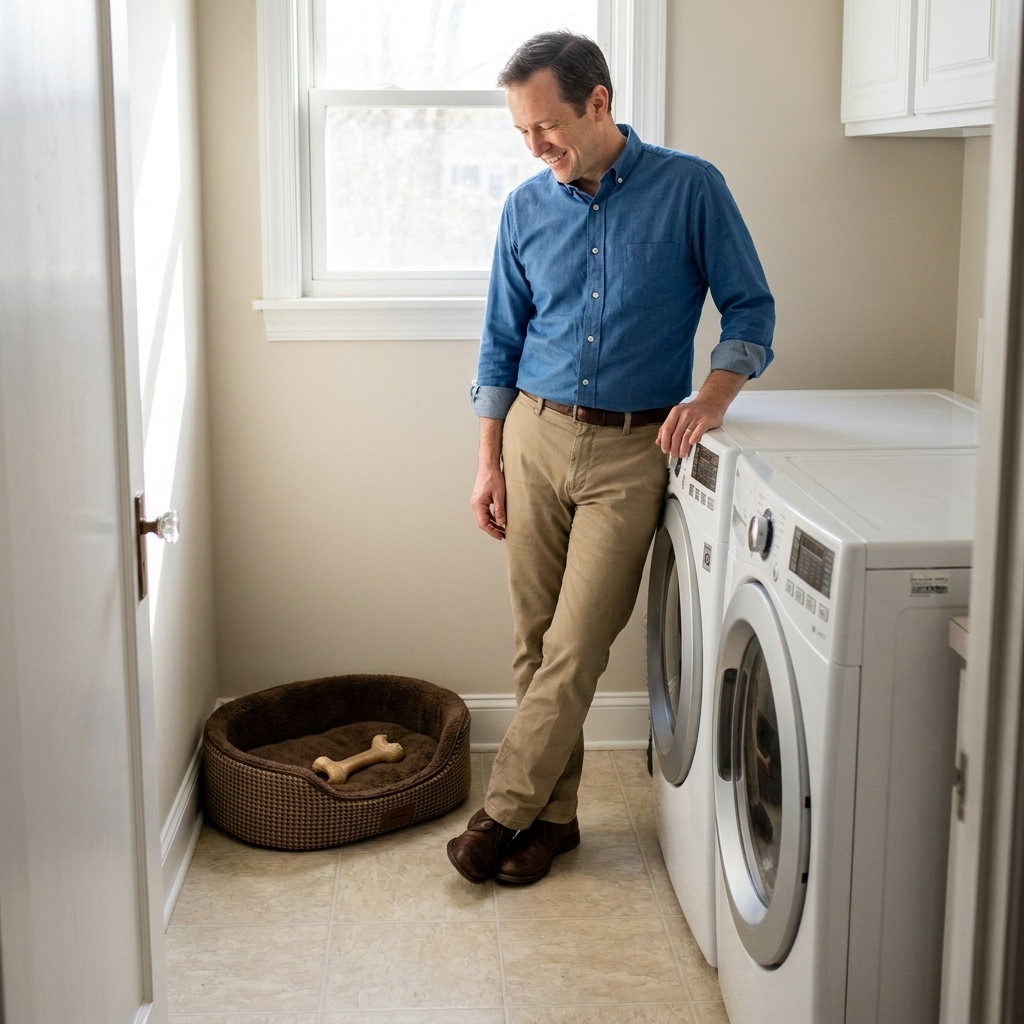
Best for basements and laundry rooms: Sheet vinyl
Sheet vinyl does not get enough respect. It is not glamorous, but in a pet-heavy utility space, it can be the easiest-to-live-with option.
Why it works
- Few or no seams: Fewer places for accidents to seep in.
- Comfortable and warmer than tile: Great for laundry rooms where everyone ends up hanging out.
- Affordable: Strong performance for the price.
The catch
Installation quality matters a lot. Poorly adhered edges or bad seams can curl and catch. If you want sheet vinyl to last, prep the subfloor properly and take seam work seriously.
Cleaning do’s and don’ts
- Skip steam mops on most floating floors: Heat and moisture can be rough on LVP and laminate seams, and plenty of manufacturers say no.
- Tile and grout: Use a pH-neutral cleaner for routine cleaning. Harsh acids can dull some finishes and beat up grout over time.
- Avoid waxy or oily cleaners: They can leave residue that attracts dirt and can reduce traction, which is the opposite of what you want with pets.
- Use enzyme cleaners for accidents: Especially on grout lines, wood, and anything with seams. Odor is a “below the surface” problem as much as a surface problem.
What I’d avoid (or only use with eyes wide open)
Carpet
Some people love carpet with pets, and I get it. It is warm and forgiving for older joints. But from a mess-and-odor standpoint, carpet is the hardest surface to keep truly clean long term.
- Best use: Bedrooms where accidents are rare and you vacuum often.
- If you do carpet: Choose low-pile, stain-treated styles and use a quality pad. Keep an enzyme cleaner on hand.
Solid hardwood (especially glossy)
It is beautiful. It also shows scratches, water spots, and wear paths fast in pet homes. Matte finishes and textured boards help, but wood is still wood.
Bamboo (mixed results)
Some strand-woven bamboo products are very hard and perform well. Others scratch and dent more than expected. If you go bamboo, research the specific product and finish system, not just the material label.
Soft natural stone like marble or travertine
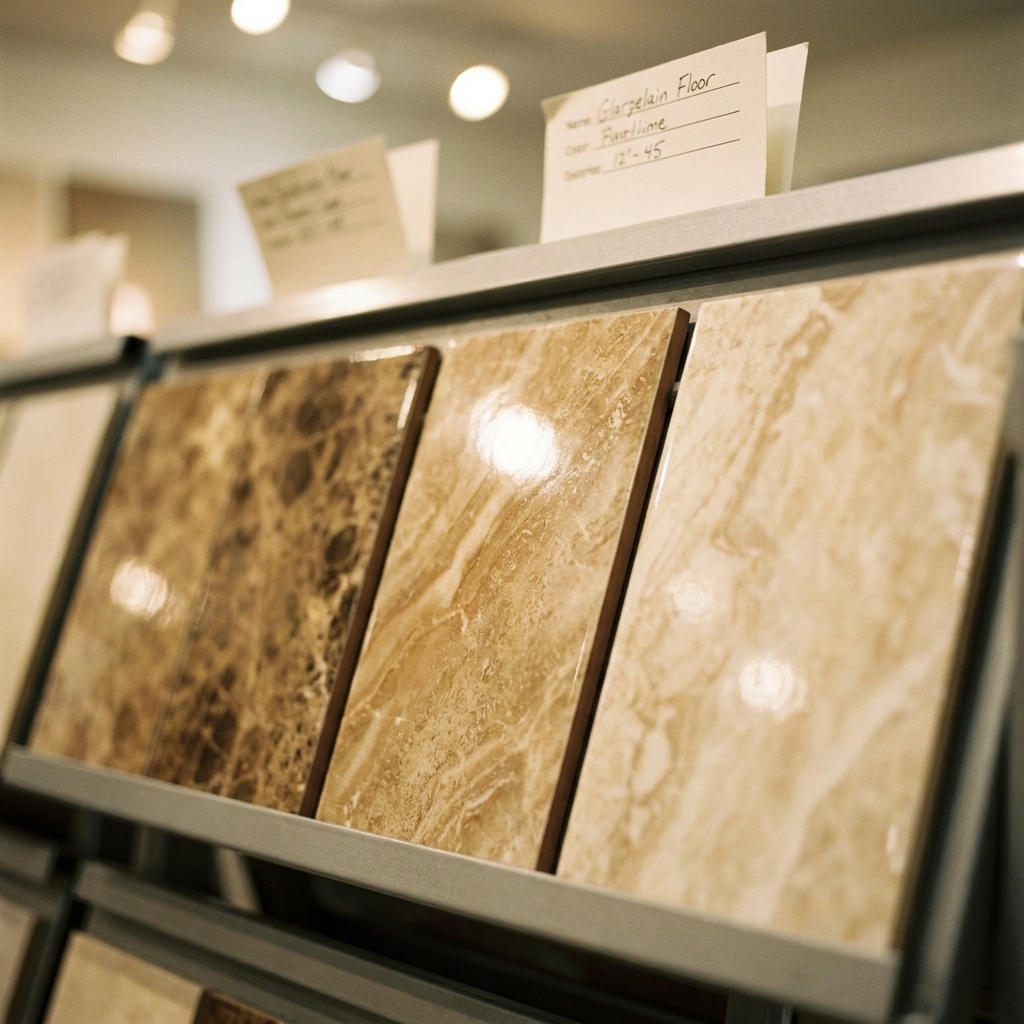
Stone is not automatically bulletproof. Softer stones can scratch, etch, and stain. If you love stone, porcelain tile that looks like stone is often a better pet-proof compromise.
How to choose the right option
Match the floor to the pet zones
- Entry, mudroom, near the water bowl: Porcelain tile, LVP, or sheet vinyl.
- Living room hangout zone: LVP, engineered wood with texture, or cork.
- Cat litter box area: Tile or sheet vinyl makes cleanup less personal.
- Basement: LVP, sheet vinyl, or tile. Avoid moisture-sensitive materials if you have dampness.
Think in layers: floor + rugs + mats
A pet-friendly floor gets even better with smart accessories. Use a tough mat under water bowls, a washable runner in the hallway, and a rug with a non-slip pad where pets launch into their daily sprint routine.
Don’t ignore nail trims
I’m not your vet, but I am your friendly flooring guy telling you the truth: even the best floor looks better when nails are kept short. If you do nothing else for scratch prevention, do that.
Quick comparison
- Best all-around: LVP
- Best for mess durability: Porcelain tile
- Best for comfort and quiet: Cork
- Best “real wood” compromise: Textured engineered hardwood
- Best budget scratch resistance: Quality water-resistant laminate
- Best for utility rooms: Sheet vinyl
FAQ
What is the best flooring for dogs that scratch?
Porcelain tile is the most scratch-resistant surface in normal residential flooring. If you want something warmer and quieter, choose a quality rigid-core LVP with a 20 mil wear layer and a textured matte finish that hides wear.
What is the best flooring for pet accidents?
Porcelain tile and sheet vinyl are the most forgiving for accidents because moisture will not soak into the surface and there are fewer places for it to hide. LVP is also an excellent option, but clean accidents quickly so liquid does not sit at seams.
Is waterproof laminate actually waterproof?
Some products are designed for better moisture performance, but seams are still the critical point. Follow the manufacturer’s installation instructions closely, wipe up spills promptly, and avoid wet mopping unless the product specifically allows it.
Will dog urine ruin vinyl plank flooring?
Vinyl itself resists staining, but urine can work into seams and edges if it sits. The bigger risk is odor trapped below the floor if liquid finds a path under planks. Clean quickly, and in repeat-accident areas consider sheet vinyl or tile for fewer seams.
Is tile too slippery for dogs?
It can be if you choose polished tile. Matte and textured porcelain options provide better traction. Area rugs and runners help a lot, especially for older dogs.
My final take
If you want the safest bet for most homes, start with rigid-core LVP. If you want the toughest surface for day-to-day pet messes and you do not mind a harder feel underfoot, porcelain tile is king. After that, it’s about your pets, your rooms, and your tolerance for maintenance.
Whatever you choose, remember the unsexy truth I learned the hard way hauling tile as a teenager and setting it as an adult: prep work is 90% of the job. A pet-friendly floor installed over a bumpy subfloor or with sloppy seams stops being pet-friendly real fast.