A DIY-friendly guide to grout color and grout types. Learn when to match or contrast, why grout is not waterproof, how joint width matters, and where sanded,...
The Grout Nest
Updated October 17, 2026
Large Format Tile vs. Mosaics for Small Bathrooms
Large format tile can help a small bathroom feel more open, while mosaics shine where slope and traction matter. Learn where each tile size works best, plus layout tips that visually expand tight spaces.

Ben Mitchell
Ben Mitchell is a former professional tile setter and passionate home renovator with over 12 years of experience in the flooring industry. After stepping away from commercial contracting, he founded Grout Nest to empower everyday homeowners to tackle their own flooring, tile, and backsplash projects with confidence. He believes that with the right tools, proper prep work, and a little patience, anyone can achieve a professional-grade finish.
I have tiled more tiny bathrooms than I can count, and I can tell you this: tile size can change how big a room feels. Not because tile has magic powers, but because your eye reads grout lines like a grid. More lines can make a space feel busier. Fewer lines can make it feel calmer and more open.
That said, mosaics are not the “wrong” choice for a small bath. In the real world, you need tile that behaves on wet floors, wraps around niches, and plays nice with oddball angles. The best-looking bathrooms are the ones where the tile size fits the job, not just the trend.
How tile size changes the feel
Grout lines are visual noise
Every grout joint is a little line your brain has to process. In a small room, a lot of grout joints can read like graph paper. That can be charming in the right design, but it can also make the room feel chopped up.
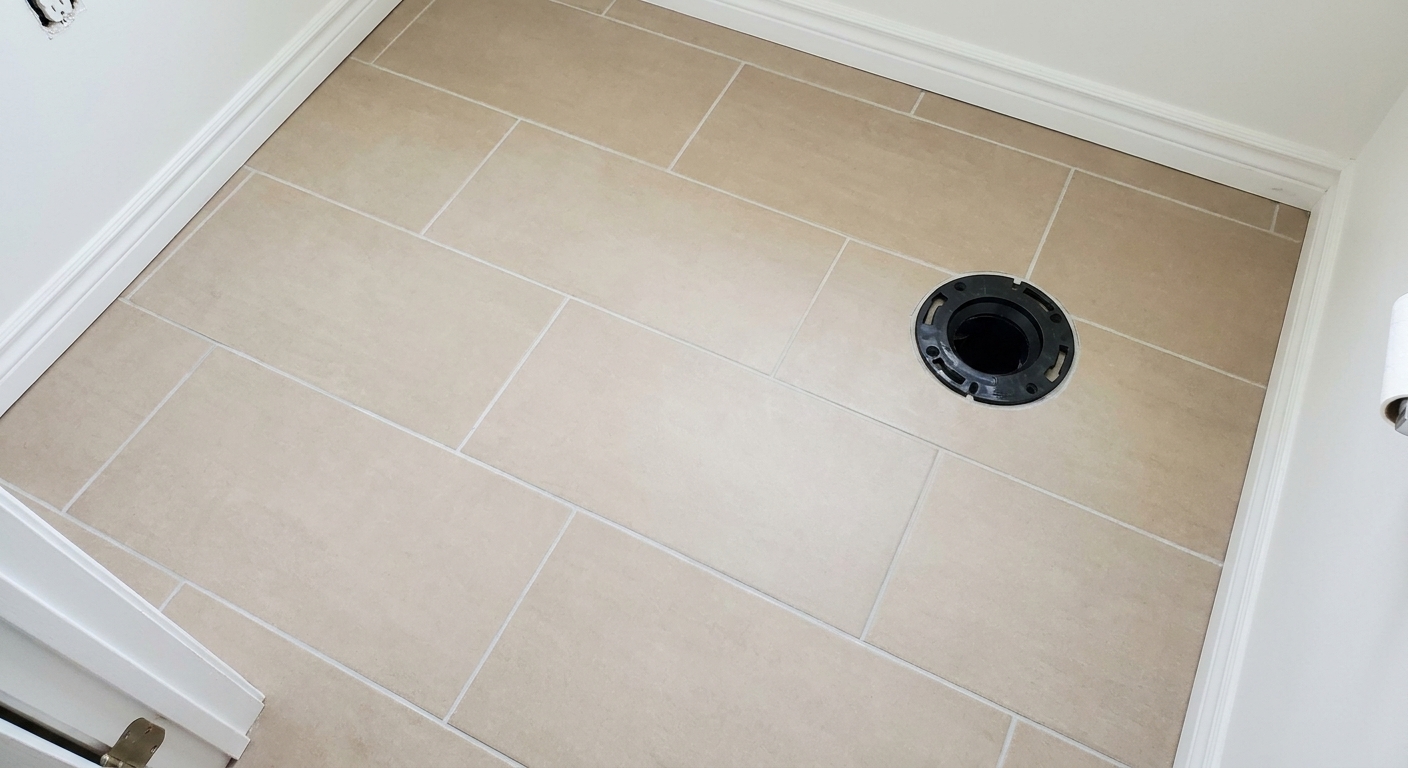
- Large format tile (think 12x24, 24x24, 24x48) usually means fewer grout lines. The surface reads more like one continuous plane.
- Mosaics (often 1x1, 1x2, 2x2, penny rounds, hex sheets) mean many grout lines. Your eye sees texture and detail, sometimes more than the actual square footage.
Pattern scale matters
People worry that big tiles will “overwhelm” a small bathroom. What overwhelms a small bathroom is usually contrast and clutter, not tile size. A calm color, a simple layout, and grout that does not scream for attention do more for visual space than picking tiny tile “because the room is tiny.”
Light and finish do heavy lifting
A light tile with a soft sheen can make a room feel bigger regardless of size. Many mosaic sheets lean matte, and the higher grout-to-tile ratio can visually darken surfaces, especially if you go with a darker grout.
Large format tile
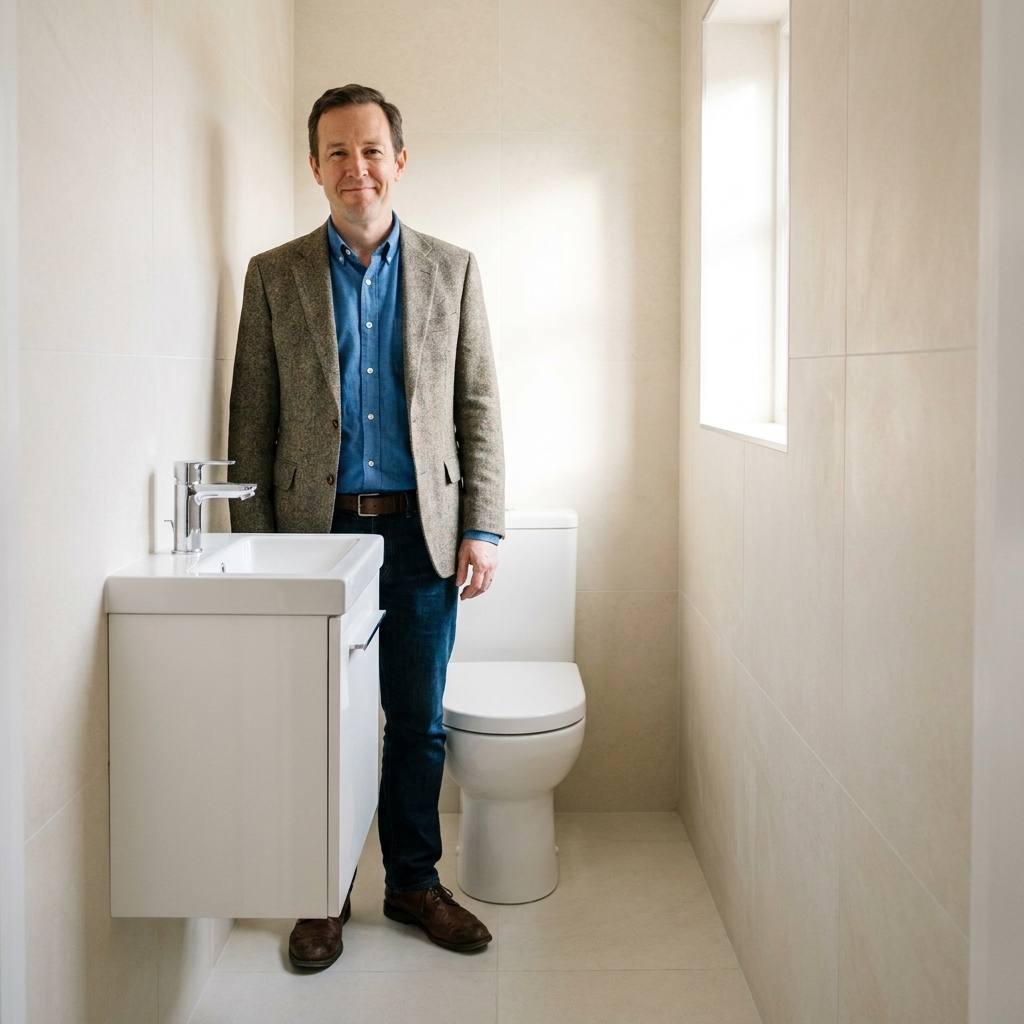
If your goal is to make a small bathroom feel less busy, large format tile is usually your best friend.
Best places for large tile
- Main bathroom floor (outside the shower): fewer grout lines reads cleaner.
- Shower walls: big tiles create a calmer backdrop and usually mean less grout maintenance.
- Bathroom walls (wainscot or full height): the room can feel taller and more “built-in.”
Why it works
- Fewer grout joints equals a more continuous surface.
- Longer lines can lead the eye across the room, especially with rectangular tile laid the long way.
- Cleaner corners when you plan cuts well, because you are not stacking a bunch of little pieces.
The real-world tradeoffs
- Flatness matters: Large format tile shows humps and dips. A common trade guideline for large format is about 1/8 inch in 10 feet and 1/16 inch in 2 feet for substrate flatness. If your floor is wavy, big tiles can “lip” at edges.
- Cutting is less forgiving: One bad cut on a 24x48 hurts your soul and your wallet.
- Handling is awkward: Tight bathrooms mean tight turns. Measure doorways and plan how the tile gets into the room.
My rule: If your subfloor and underlayment are solid and flat, large format tile is one of the easiest ways to make a small bathroom feel more open.
Mosaics
Mosaics are not just a decorative accent. In small bathrooms, they solve problems that large tile cannot.
Best places for mosaics
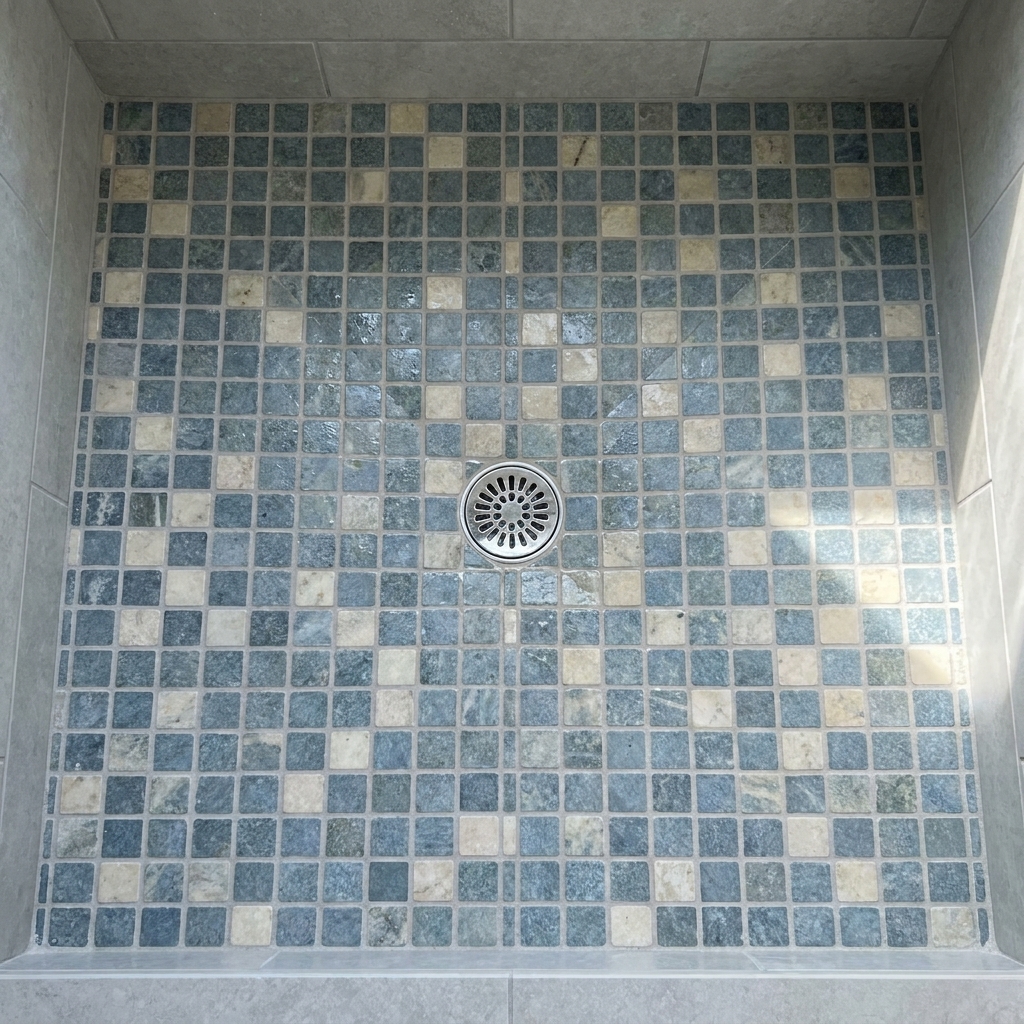
- Shower floors: The slope to the drain is easier to tile with small pieces, and the extra grout lines can add grip.
- Niches and benches: Small tile wraps tight spaces without goofy cuts.
- Curbs and odd shapes: Mosaics conform to curves and angles.
- Accents: A little texture goes a long way in a small space.
Traction, but be smart
Grout lines can help your feet find purchase, but they are not a substitute for picking the right tile. For wet areas, look for mosaics made for shower floors and pay attention to texture and slip ratings where available (DCOF, manufacturer notes, and real-world reviews).
The tradeoffs
- More grout to clean: This is the big one. If you hate scrubbing, limit mosaics to where they earn their keep.
- Sheet-mounted quirks: Cheap sheets can be uneven. You end up babysitting alignment so the pattern does not wander.
- Grout color choices matter more: High contrast grout highlights the grid. Low contrast grout quiets it down.
My size map
If you want a small bathroom that feels larger and still functions well, here is a setup that works in the real world.
Main floor
- My go-to: 12x24 porcelain, rectified if you want tighter joints.
- Also solid: 24x24 if your floor is very flat and the room layout allows it.
- Try to avoid: Tiny mosaics everywhere on the main floor. It can read busy and it is extra grout maintenance.
Shower floor
- My go-to: 2x2 mosaics or similar small formats designed for shower pans.
- Good options: Penny rounds, small hex, and textured mosaics for traction.
- Be cautious with: Large tile on a shower floor unless you are using a linear drain and you have a plan for slope and lippage.
Shower walls
- My go-to: 12x24 or larger in a light, calm tone.
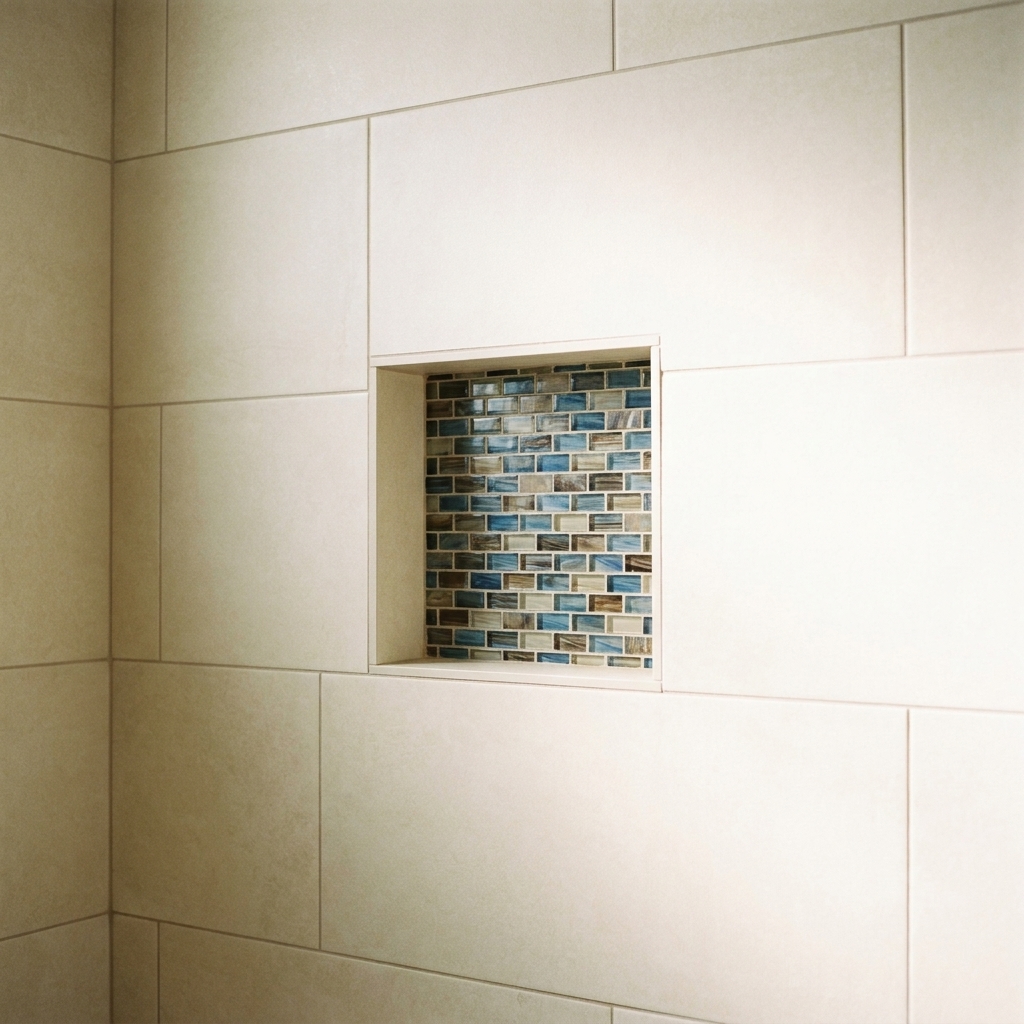
- Accent idea: A vertical mosaic strip or a mosaic niche back wall, not the entire shower.
Bathroom walls
- To emphasize height or width: Larger tiles run vertically can emphasize height. Larger tiles run horizontally can emphasize width. Either works if you keep grout subtle.
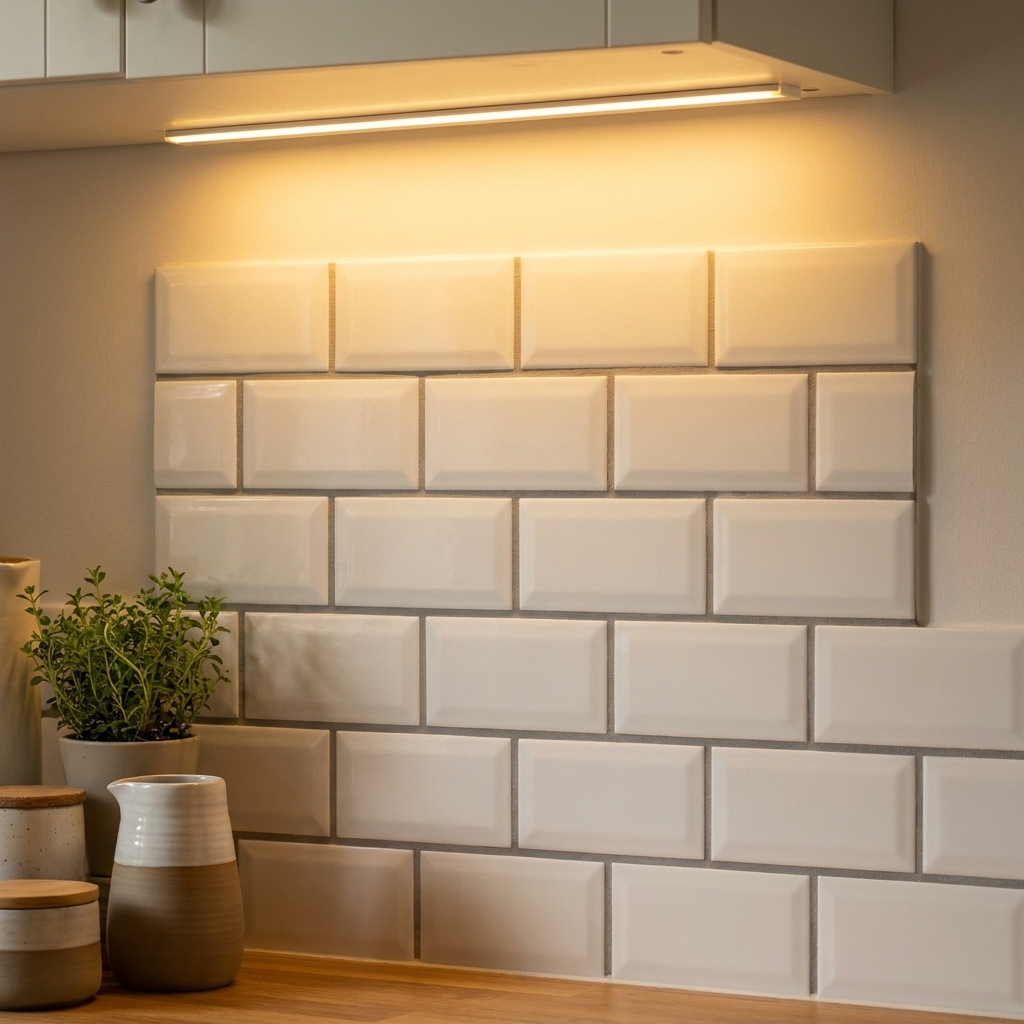
- Classic win: Subway tile can look great, but it adds grout lines. Choose a grout color close to the tile to keep it airy.
Layout tricks
Use fewer transitions
Every change in material or direction is a visual break. If you can keep the main floor tile consistent and carry it into the shower curb face or a short wainscot, the room reads bigger.
Match grout to tile
High contrast grout is a look, but it shrinks a space visually because it emphasizes every joint. For small bathrooms, I usually lean toward low contrast grout on large field areas.
Keep joints tight, but follow the rules
Yes, tighter joints mean fewer visible lines. But joint size must match the tile’s edge quality and size variation.
- Rectified porcelain: Often works well with 1/16 inch to 1/8 inch joints, as long as the manufacturer allows it.
- Non-rectified ceramic: Commonly needs 1/8 inch or larger, and sometimes more, depending on the tile and the stated minimum joint.
If you try to force tiny joints on inconsistent tile, you end up with wedges, lippage, and the kind of language your kids should not hear.
Avoid the worst lippage pattern
One quick pro tip: if you are using 12x24 (or any tile that might have a little bow), a 50 percent offset can put the highest point of one tile next to the lowest point of the next. In a lot of installs, a 1/3 offset looks better and helps reduce lippage headaches.
Pick a direction and commit
In small bathrooms, a consistent layout reads cleaner. If you run 12x24 tile with the long side parallel to the longest wall, the room often feels stretched in that direction. Not always, but often.
Use mosaics like seasoning
A mosaic niche, a shower floor, or a narrow accent can bring personality without turning the entire room into grout maintenance.
Common mistakes
Choosing tile size without thinking about slope
Shower floors need pitch. Small tile follows that pitch gracefully. Big tile fights it unless the system is designed for it.
Ignoring the starting point
Where you start a layout matters more in a small room because every cut is in your face. Dry lay a row, find the most visible wall, and plan for balanced cuts where your eyes land first.
Overdoing contrast
Dark grout on light tile looks crisp, but in a tiny bathroom it can dominate. If you want contrast, consider doing it in a niche or on a small accent area.
Skipping prep and standards
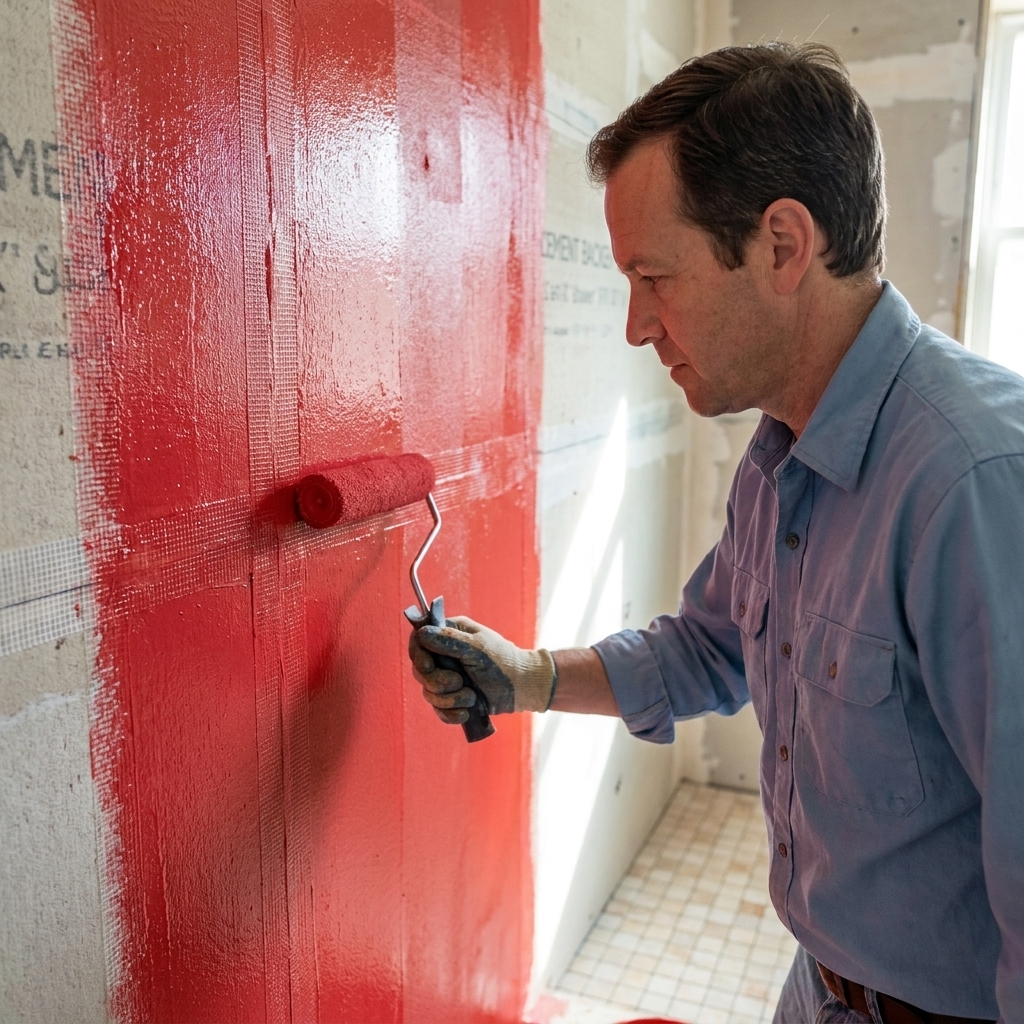
I know I sound like a broken record, but prep work is most of the job. For showers especially, build the assembly using a proven method and follow the waterproofing and setting-material manufacturer instructions. Tile does not forgive shortcuts.
Quick picks
Very small powder room
- Floor: 12x24 or 24x24 if the floor is flat.
- Walls (optional): Large tile wainscot to reduce visual clutter.
Small full bath with tub
- Main floor: 12x24.
- Tub walls: 12x24 or similar large format.
- Accent: Mosaic niche back or a slim vertical stripe.
Small bath with tiled shower
- Main floor: Large format.
- Shower floor: Mosaic.
- Shower walls: Large format for a calmer look and less grout maintenance.
FAQ
Do large tiles make a small bathroom look bigger?
They can. Fewer grout lines often reads calmer, which can make a tight room feel more open, especially if tile and grout are close in color.
What is a good tile size for a small bathroom floor?
In my experience, 12x24 porcelain is a very manageable, widely available choice that reduces grout lines without being a nightmare to cut and handle.
Are mosaics outdated?
No. They are still the most practical choice for many shower floors and detailed areas. Keep the palette simple and they read clean and modern.
Should I use the same tile on the bathroom floor and shower floor?
Usually, no. The shower floor needs more grip and it needs to follow the slope to the drain. A common winning combo is large format on the main floor and a coordinating mosaic on the shower pan.
What grout color makes a small bathroom look bigger?
Usually a grout color that is close to the tile color. High contrast grout highlights every joint and can make a small surface feel busier.
My bottom line
If you want a small bathroom to feel bigger, start with large format tile for the big, flat surfaces and use mosaics where they solve real problems, especially shower floors and tight details. Pair that with low-contrast grout and a clean layout plan, and you will be shocked how grown-up a small bathroom can feel.
And if you only remember one thing from me, the guy who has set tile for a living and still managed to mess up his own DIY projects: prep work is most of the job. Tile size just decides how loudly your bathroom will announce whether you did that prep.