Step-by-step mixing instructions for cement-based thinset and grout using a paddle and drill, plus pro techniques to keep it workable longer and easy to spread.
The Grout Nest
Published
Mastic vs. Thinset: Which Tile Adhesive for Walls and Floors
Mastic and thinset are not interchangeable. Learn where premixed mastic works (dry interior walls like backsplashes) and where cement-based thinset is the safer choice (floors, showers, large-format tile, membranes, and backer board), plus how to pick the right ANSI-rated mortar.

Ben Mitchell
Ben Mitchell is a former professional tile setter and passionate home renovator with over 12 years of experience in the flooring industry. After stepping away from commercial contracting, he founded Grout Nest to empower everyday homeowners to tackle their own flooring, tile, and backsplash projects with confidence. He believes that with the right tools, proper prep work, and a little patience, anyone can achieve a professional-grade finish.
I grew up around tile guys who treated adhesive choice the same way they treated a table saw. Respect it, or it will bite you. When I was a teenager hauling boxes of porcelain for my uncle, I thought “tile glue is tile glue.” Then I watched a beautiful floor turn into a slow-motion disaster because someone used premixed mastic where it had no business being.
So let’s settle it clearly: mastic and thinset are not interchangeable. They are different products with different strengths, different failure modes, and very different “where you can get away with it” situations.
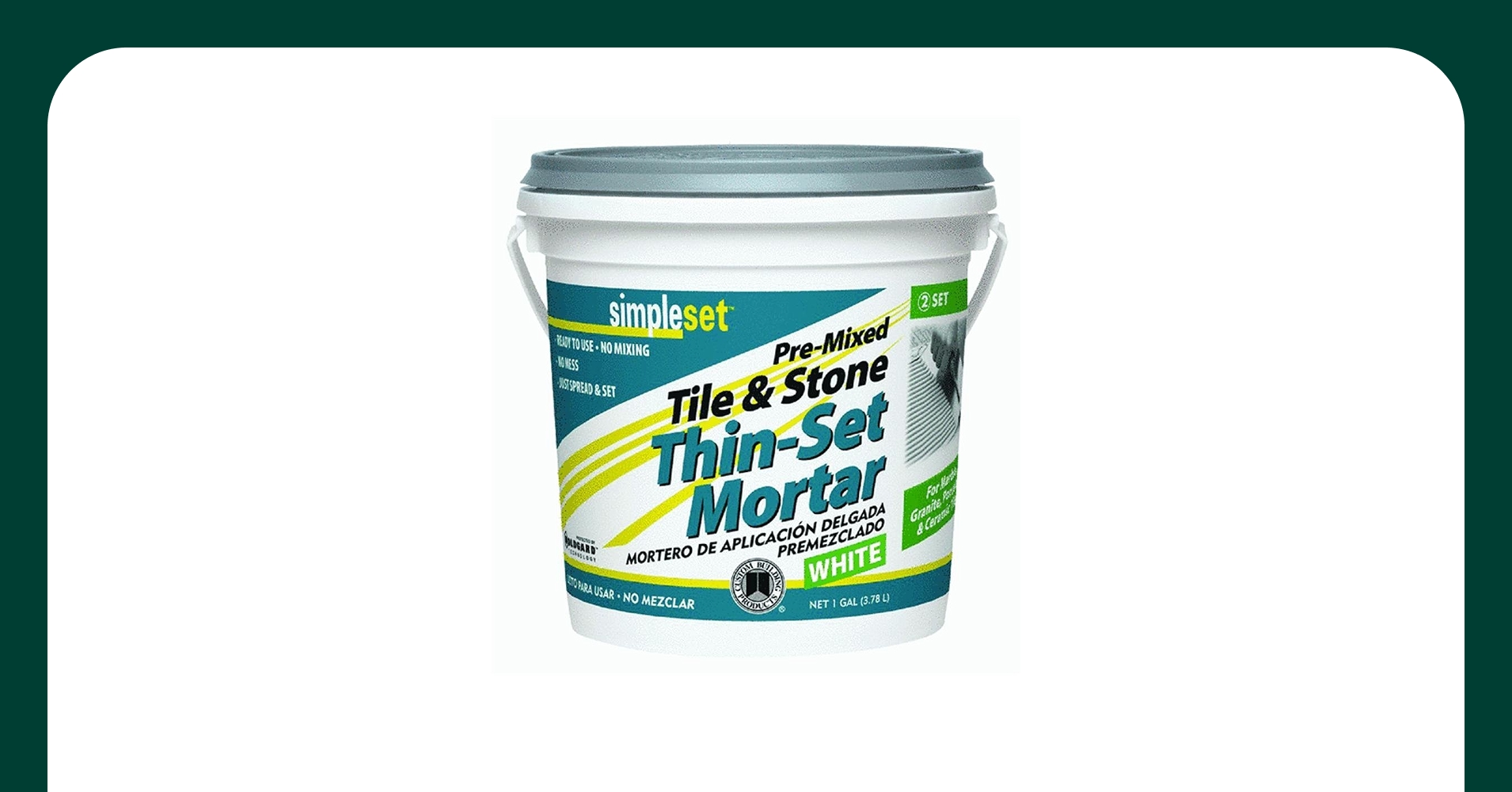
The quick rule I use on jobs
- Dry interior wall (backsplash, wainscot, accent wall): mastic can be a great choice.
- Any floor: use a cement-based thinset mortar that matches the tile and substrate.
- Wet areas (shower, tub surround in the wet zone, steam shower), exterior, or heat exposure: use the right thinset or specialty mortar for the application and temperature range.
- Large-format porcelain tile: thinset, and usually a medium bed or LFT rated mortar.
- Installing over cement backer board or uncoupling membrane: thinset per the manufacturer requirements.
If you only remember one sentence from this article, make it this: As a general rule, premixed mastic belongs on dry walls. Thinset is the safer default everywhere else.
And one more sentence that matters just as much: follow the tile, membrane, and substrate manufacturer specs, even if it contradicts your favorite shortcut.
What mastic is (and why it’s tempting)
Mastic is a premixed organic adhesive. It comes ready to use in a bucket. You open it, stir it, trowel it, set tile. No measuring water, no mixing drill, no “I swear it was peanut butter consistency five minutes ago.” For a beginner, that simplicity feels like a warm hug.
Why homeowners like mastic
- Convenience: no mixing, no dust cloud in your kitchen.
- Good initial tack: small wall tile grabs quickly.
- Long working time in the bucket: lid goes back on, and it’s still usable later (within product limits).
- Often easier for vertical tile: it can hold small tiles in place with less slipping.
How mastic cures (this matters)
Mastic dries to harden. That means it needs air exposure. Sandwich it between a non-porous tile and a low-permeability surface and it can take a long time to fully dry. In some cases, it never truly firms up the way you need it to.
That drying behavior is the reason mastic has a very specific comfort zone: small-to-medium tile on dry interior walls, where the assembly can breathe and isn’t being soaked, heated, or flexed.
Yes, some Type I mastics are rated for limited, intermittent moisture. I still treat that as a narrow exception and not a green light for showers or anything that stays wet.
What thinset is (and why pros trust it)
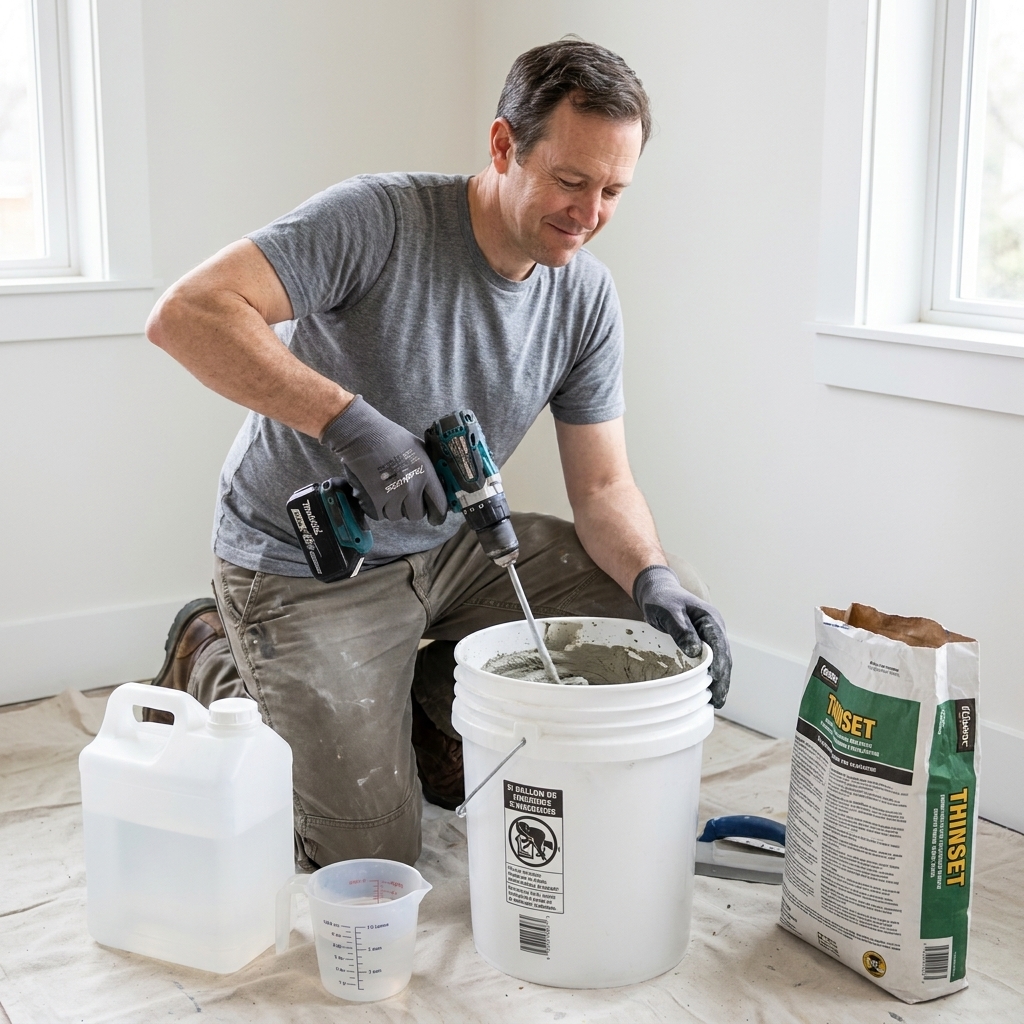
Thinset mortar is cement-based (often with polymer modifiers). You typically buy it as a powder in a bag and mix it with water or a liquid additive. It’s messier at first, but the chemistry is on your side.
How thinset cures
Thinset hydrates. In plain English, it cures through a chemical reaction with water, not by “air drying.” That’s why it can harden properly even when it’s trapped between dense porcelain tile and waterproof membranes.
One nuance the pros will care about: some polymer-modified mortars can cure more slowly when sandwiched between very impervious layers (think porcelain over certain membranes). It still cures, but patience and the right mortar choice matter.
Why thinset is the default for floors and wet areas
- Compressive strength: built to handle foot traffic and point loads.
- Moisture resistance: suitable products can handle wet environments.
- Bond reliability: strong, predictable adhesion when mixed and applied correctly.
- Compatibility: designed to work with cement board, membranes, and modern porcelain.
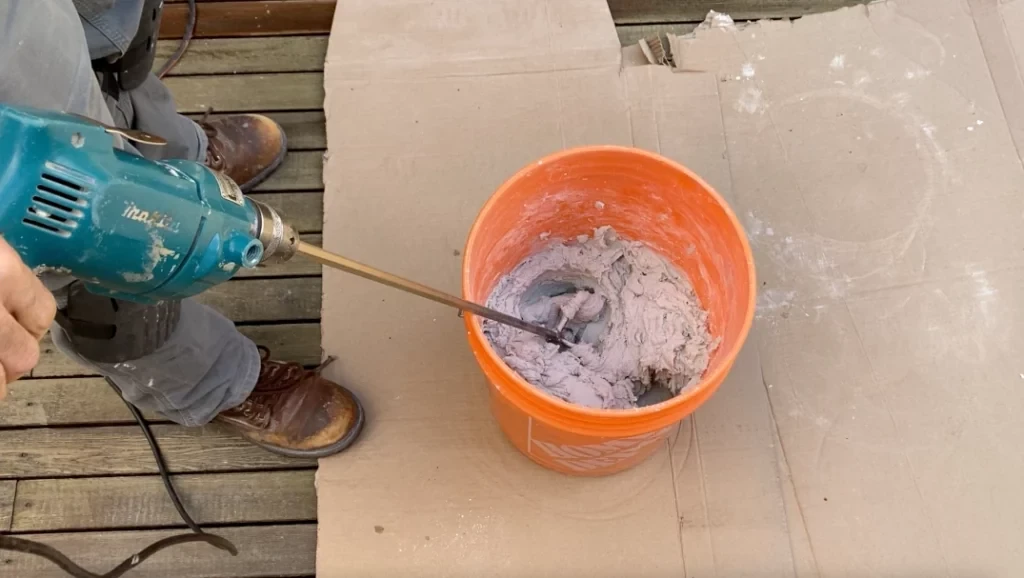
Mastic vs. thinset: what changes outcomes
1) Where they can be used
- Mastic: best for dry interior walls like kitchen backsplashes, bathroom backsplashes (not inside the shower), and decorative wall tile.
- Thinset: best for floors, showers, tub surrounds in the wet zone, exteriors, heat exposure, and anything structural.
2) Sag on walls (slumping and sliding)
Sag is when tile slowly creeps downward after you set it. On a backsplash it shows up as grout lines getting tighter at the bottom and wider at the top. It is maddening.
- Mastic: often has good initial grab for small wall tile, so it can feel “stickier” right away.
- Thinset: varies by product. Many modern mortars are labeled non-sag or medium bed or LFT and are excellent on walls, even with heavier tile.
My takeaway: If you are setting heavier tile on a wall, do not default to mastic. Choose a quality non-sag thinset and save yourself the fight.
3) Open time and adjustability
Open time is how long you have after troweling adhesive before it skins over and stops bonding well.
- Mastic: can give you a comfortable working window, but it can also skin over if spread too far ahead, especially in a warm, dry room.
- Thinset: open time depends on the mortar. Many give you solid working time, but you must respect the clock and remix rules. Once it starts to firm up in the bucket, you do not add water unless the manufacturer explicitly allows it.
Practical tip: Whichever you choose, spread only as much as you can tile in about 10 to 15 minutes until you learn how fast you work. Pull a tile occasionally. If the ridges are skinned and dry, scrape and reapply.
4) Cure time under dense tile
- Mastic: slows down dramatically under large, dense, low-porosity tile (hello, porcelain). It can stay soft longer than you think.
- Thinset: cures through hydration, so it can harden without airflow. Depending on the mortar and how impervious the layers are, it may cure slowly, but it is still the correct chemistry for the job.
5) Water and heat tolerance
- Mastic: not for wet areas. Some products claim “intermittent moisture,” but I still treat mastic as a dry wall product unless the manufacturer spells out a specific exception.
- Thinset: the right mortar can be used in showers, exteriors, and over radiant heat, assuming the rest of the system is built correctly.
Where mastic works great
I am not anti-mastic. I am anti-using-mastic-like-it’s-thinset.
Best mastic use cases
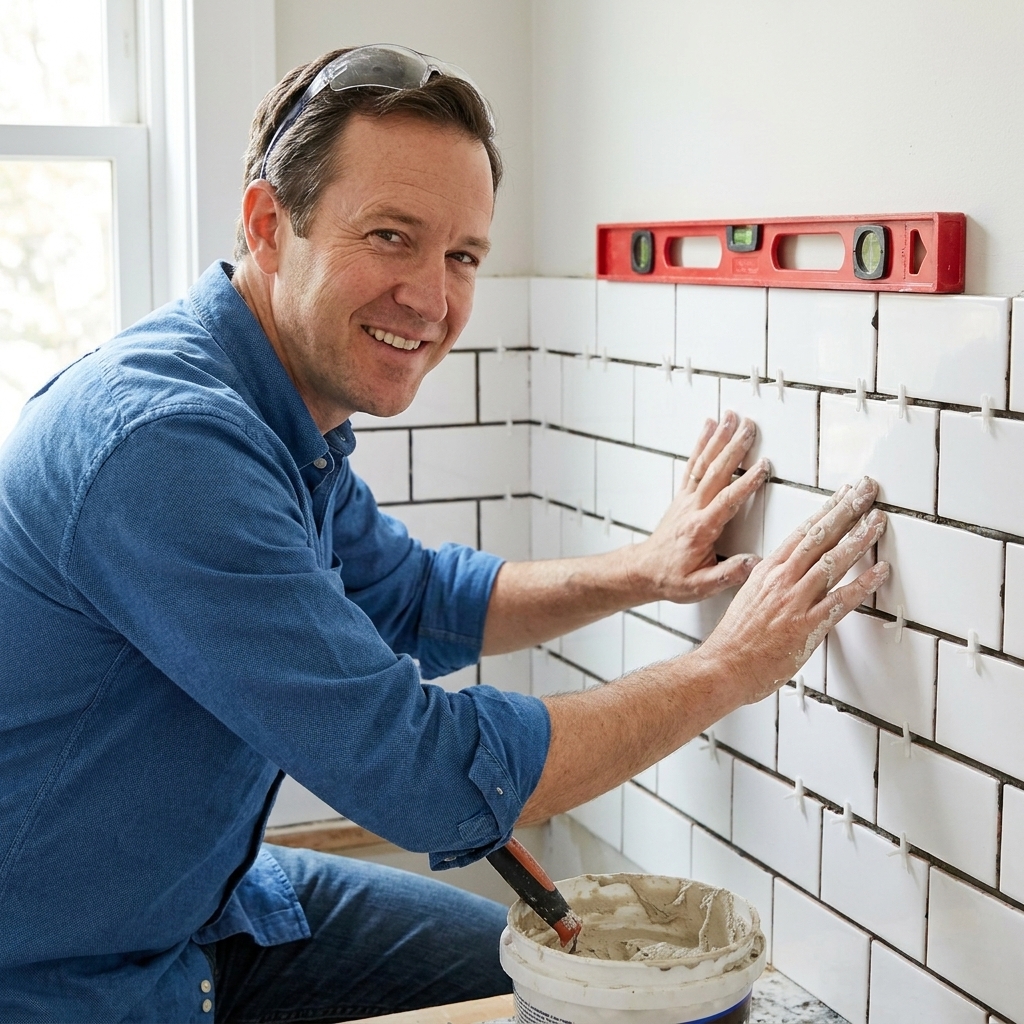
- Kitchen backsplash with ceramic subway tile or small mosaic sheets on drywall
- Bathroom backsplash outside the wet zone
- Dry accent walls where tile is mostly decorative
- Quick repairs on dry vertical surfaces (matching the existing system)
What I watch for: I keep tile size modest, keep the area dry, and I do not trap mastic behind a giant porcelain plank tile where it cannot dry.
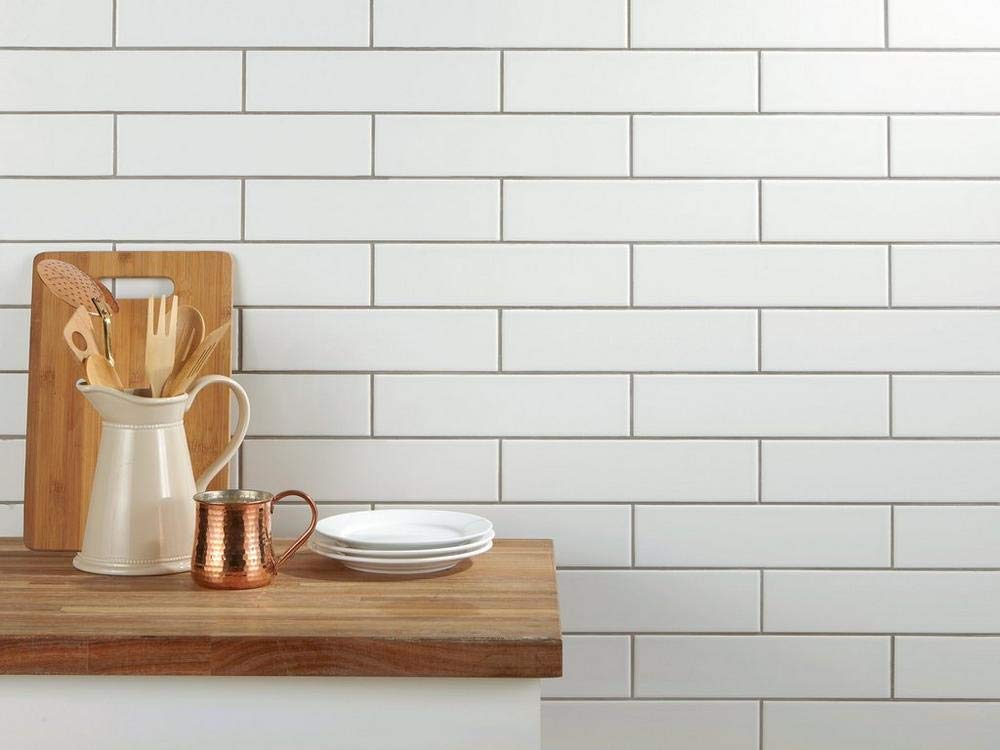
Where mastic fails (and why)
Floors
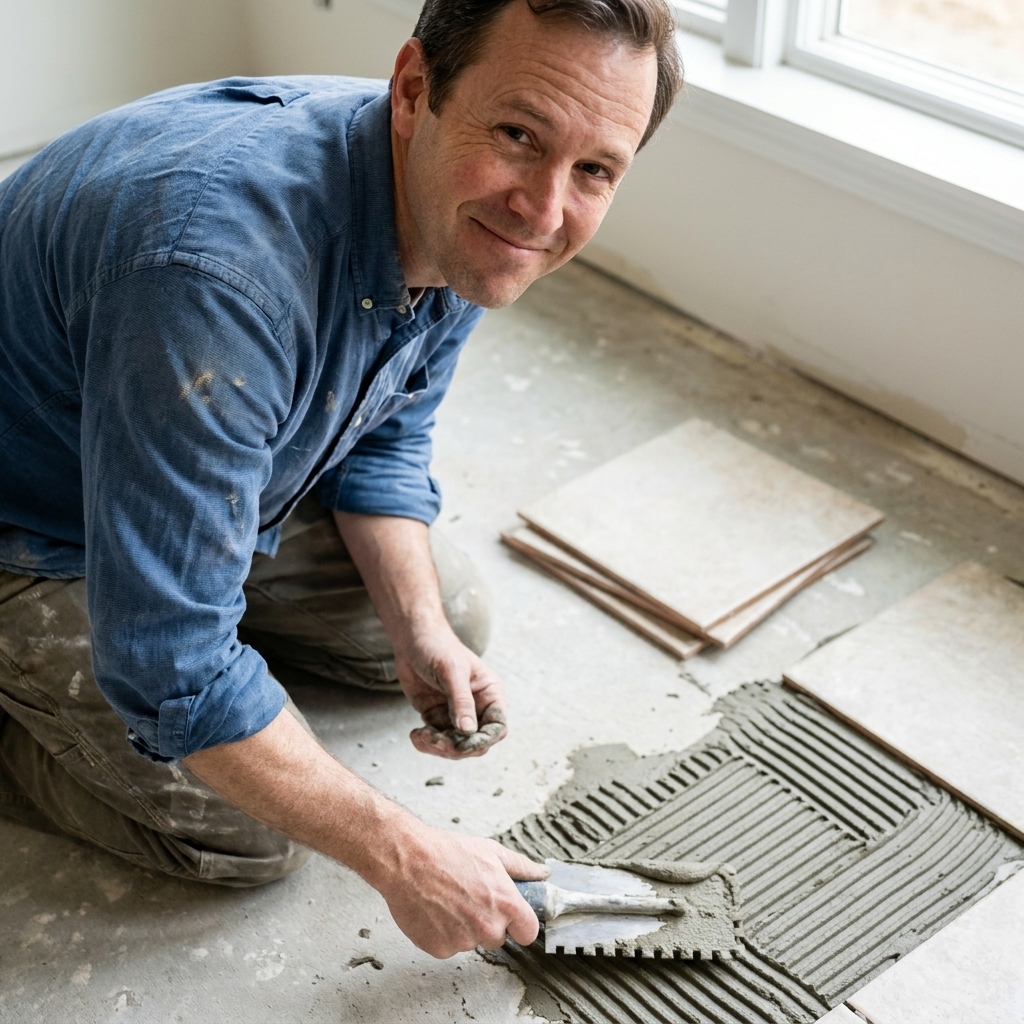
This is the classic mistake: someone sees “tile adhesive” in a bucket and thinks it will save time on a floor. Floors need an adhesive that handles compression, movement, and long-term loading. Mastic is not built for that job.
Even if it seems hard at first, a floor can punish a weak bond slowly. Tiles get hollow, grout starts cracking, corners loosen, and then one day you hear that crunch underfoot and you know what you are doing next weekend.
Wet areas (showers and the wet zone)
Mastic and constant moisture do not mix. It can re-emulsify, soften, or never fully dry behind tile. In a shower, that is not a “maybe.” It is an eventual failure.
Large-format tile
Large-format tile needs excellent coverage and a mortar that supports the tile without slumping. Mastic also struggles to dry under big porcelain pieces. Result: extended cure times, compromised bond, and a tile that can shift when you least want it to.
Backer board installs and modern membranes
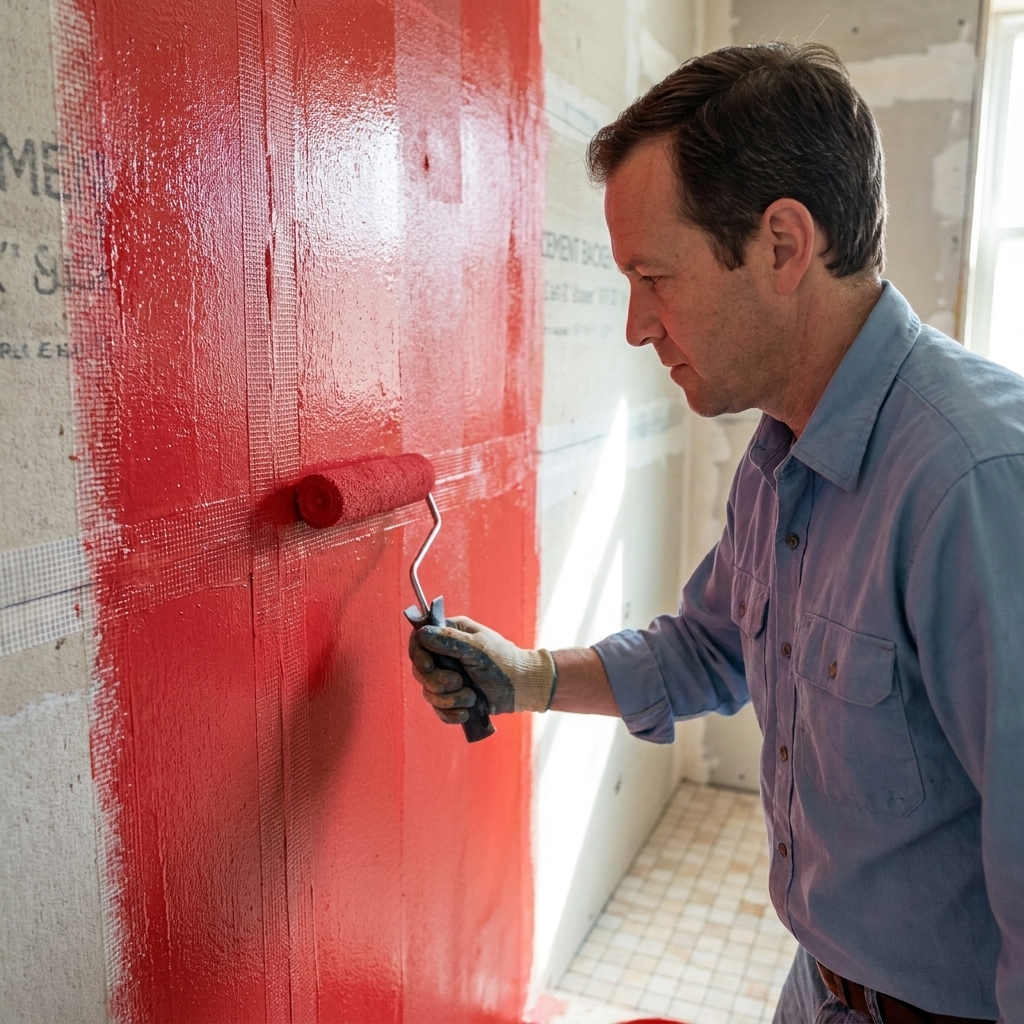
Cement backer board and uncoupling or waterproof membranes are typically specified with thinset mortars. Mastic is not the right chemistry for those assemblies, and using it can void warranties or cause bond issues.
The “premixed thinset” trap
If you remember another quick rule: cement-based thinset mortar is sold as a dry powder.
There are premixed products marketed in a way that makes them sound like thinset. Most of those are mastics or mastic-like adhesives. When you are standing in the aisle, read the fine print. If it is in a bucket and ready to spread, treat it like mastic and use it only where mastic is appropriate.
Also, know that there are specialty systems out there (like epoxy mortars) that are not powders either. That does not make them “thinset,” it just means you are in a different category of setting material with its own rules.
Picking the right adhesive
A simple spec note (worth reading)
If you want one fast “grown-up” way to shop thinset, look for the ANSI rating on the bag and match it to your installation:
- ANSI A118.4 or A118.15: common choices for porcelain, floors, and demanding installs (check the membrane and tile requirements).
- ANSI A118.1: unmodified thinset, sometimes required by specific membranes in specific layers.
I am keeping this homeowner-friendly on purpose, but that little ANSI box on the bag can save you from buying the wrong mortar for the system you are building.
Choose mastic if all of these are true
- The tile is going on a dry interior wall.
- The tile is small to medium (think typical ceramic wall tile or mosaic).
- The surface is appropriate (usually clean, sound drywall in a dry area).
- You want easy handling and good initial grab.
Choose thinset if any of these are true
- It is a floor, even a powder room.
- It is a wet area (shower, tub surround wet zone, steam shower).
- It is large-format tile or dense porcelain.
- You are bonding to cement board or a membrane.
- You need a product rated for exterior or heat.
If you are unsure
When in doubt, choose thinset and match the mortar type to your tile and substrate. It is the more forgiving choice structurally, even if it asks a little more of you during mixing and application.
Coverage matters more than people think
A lot of tile failures get blamed on “bad glue” when the real problem is coverage. Two quick targets to keep in mind:
- Dry areas: aim for at least 80 percent mortar coverage.
- Wet areas: aim for at least 95 percent mortar coverage, with full support at edges and corners.
Use the right trowel for the tile size, key the mortar into the substrate, and for large-format tile, back-butter the tile when needed to hit those coverage numbers. Pull a tile now and then and actually look. It is the easiest quality check you have.
My strongest warning
I have pulled up enough failed tile to say this without any drama: using premixed mastic on a floor is one of the most expensive “time savers” in home improvement. It might look fine for a while. Then grout starts cracking. Then tiles get loose. Then you are scraping gummy adhesive off a subfloor on your knees, questioning every decision you have ever made.
If a bucket says “tile adhesive” and you are doing a floor, close the lid and back away slowly. Buy a bag of the right thinset. Mix it. Spread it. Sleep better.
FAQ
Can I use mastic for a shower wall if I seal the grout really well?
No. Sealer is not waterproofing, and showers are a constant moisture environment. Use a proper waterproofing system and a thinset mortar approved for it.
Is mastic okay behind a kitchen stove as a backsplash?
Usually, yes, as long as it is a standard drywall backsplash area and the product is rated for that use. That said, heat is a real factor near ranges. If you are tiling close to a high-heat source or you want maximum peace of mind, use thinset and confirm it is rated for the temperatures and clearances involved.
What about porcelain subway tile on a backsplash, mastic or thinset?
If it is porcelain, I lean thinset because porcelain is dense and less porous, which slows mastic drying and can reduce bond confidence. You can still do a backsplash with thinset cleanly, just mix small batches and keep your trowel lines neat.
Do I need a special thinset for large-format tile?
Often, yes. Look for a mortar rated for LFT (large format tile) or medium bed. It helps support the tile and maintain coverage without excessive shrinkage or slump.
What is the biggest sign I used the wrong adhesive?
For floors: hollow-sounding tiles, cracked grout, and tiles that shift or rock. For walls: tile slipping, extended cure time, and tiles that can be pulled off too easily after “curing.”
Bottom line
Mastic is a handy product in the right lane: dry interior walls with smaller tile. Thinset is the workhorse for basically everything that has consequences: floors, wet zones, membranes, backer board, and large-format porcelain.
If you want the kind of install that still looks sharp years from now, choose the adhesive like a pro: match it to the environment, the tile, and the substrate, and follow the system specs. Prep work is 90 percent of the job, but the other 10 percent is picking materials that will not sabotage your hard work.