A clear, DIY-friendly guide to square-notch, U-notch, and V-notch trowels, plus a practical sizing chart by tile size to help you hit proper thinset coverage.
The Grout Nest
Published
Why Floor Tile Sounds Hollow
Hollow-sounding ceramic or porcelain tile usually means low mortar coverage or a tile that has started to debond. Learn the coin test, what causes it, and when to monitor versus reset before it cracks.

Ben Mitchell
Ben Mitchell is a former professional tile setter and passionate home renovator with over 12 years of experience in the flooring industry. After stepping away from commercial contracting, he founded Grout Nest to empower everyday homeowners to tackle their own flooring, tile, and backsplash projects with confidence. He believes that with the right tools, proper prep work, and a little patience, anyone can achieve a professional-grade finish.
The first time a homeowner asked me about a “drummy” tile, I made the mistake of tapping it like I was checking a watermelon at the grocery store. Tap tap tap. I looked confident. Inside, I was doing math: Is this one lonely void… or the beginning of a full-on debond?
A hollow sound under ceramic or porcelain floor tile is common, and it does not automatically mean the tile is about to explode. But it does mean the tile is not fully supported the way it should be, and that changes how the floor handles foot traffic, chair legs, and temperature swings.
This guide will help you figure out what you are hearing, what likely caused it, and what to do next.
What a hollow sound means
Tile is supposed to be bonded to the substrate with thinset mortar, or with a large-and-heavy-tile (LHT) mortar for bigger or heavier tiles. Either way, you want enough mortar coverage that the tile is supported across most of its underside.
When you tap a tile and it sounds hollow, one of these is typically happening:
- There is a void under part of the tile. The tile is still bonded in other areas, but a section has little or no mortar contact.
- The mortar never bonded well in the first place. Thinset can skin over, be mixed too stiff, or be spread over dusty surfaces, leaving weak adhesion even if it looks fine from above.
- The tile has started to debond. Movement, moisture, or poor prep can cause the bond to break after the fact, creating a hollow pocket that grows over time.
Think of the tile like a bridge. The more of the tile that is unsupported, the more it flexes. Tile and grout hate flex.
Common causes
1) Thinset coverage was too low
This is the big one. For floors, industry minimums are commonly cited as about 80% mortar coverage for dry interior areas and about 95% coverage for wet areas and exteriors, with full support at edges and corners. In real life, I aim higher whenever I can because edges and corners are where loads concentrate.
Low coverage usually comes from:
- Using a trowel notch that is too small for the tile size or the flatness of the floor
- Not holding the trowel at a consistent angle
- Setting tile onto a floor that is not flat enough, so ridges do not collapse evenly
- Not keying mortar into the substrate before combing
- Not back-buttering tiles when the situation calls for it (large format tile, cupped tile, textured backs)
2) The mortar skinned over
Thinset is not glue you can leave open forever. If it sits too long after being troweled, the surface starts drying and forms a skin. You can still press a tile into it and it will look set, but the bond can be weak.
Common reasons it skins over:
- Working too large of an area at once
- Hot, dry air or direct sun hitting the floor
- High air movement from HVAC or fans
- Using a mortar with a short open time, then moving slowly
A quick field check when installing is to lightly touch the ridges. If they are tacky and transfer to your finger, that is a good sign you are still within open time. If they feel dry and do not transfer, scrape and re-trowel. Open time varies a lot by mortar, temperature, airflow, and how thirsty the substrate is, so do not treat the finger test like a lab instrument. It is just a practical warning light. I have learned that lesson the hard way.
3) The tile debonded later
If the tile used to feel solid and now sounds hollow, or if the hollow area seems to be spreading, you may be dealing with debonding.
Debonding is often tied to movement issues, like:
- Subfloor flex (undersized joists, too-thin subfloor, or loose panels)
- Lack of uncoupling or crack isolation where it was needed
- Expansion issues (tile pinned tight to walls with no perimeter movement space)
- Moisture problems (especially over concrete or in bathrooms where water finds pathways)
How to test
You do not need special equipment to get useful information. You need a consistent tapping method and a little patience.
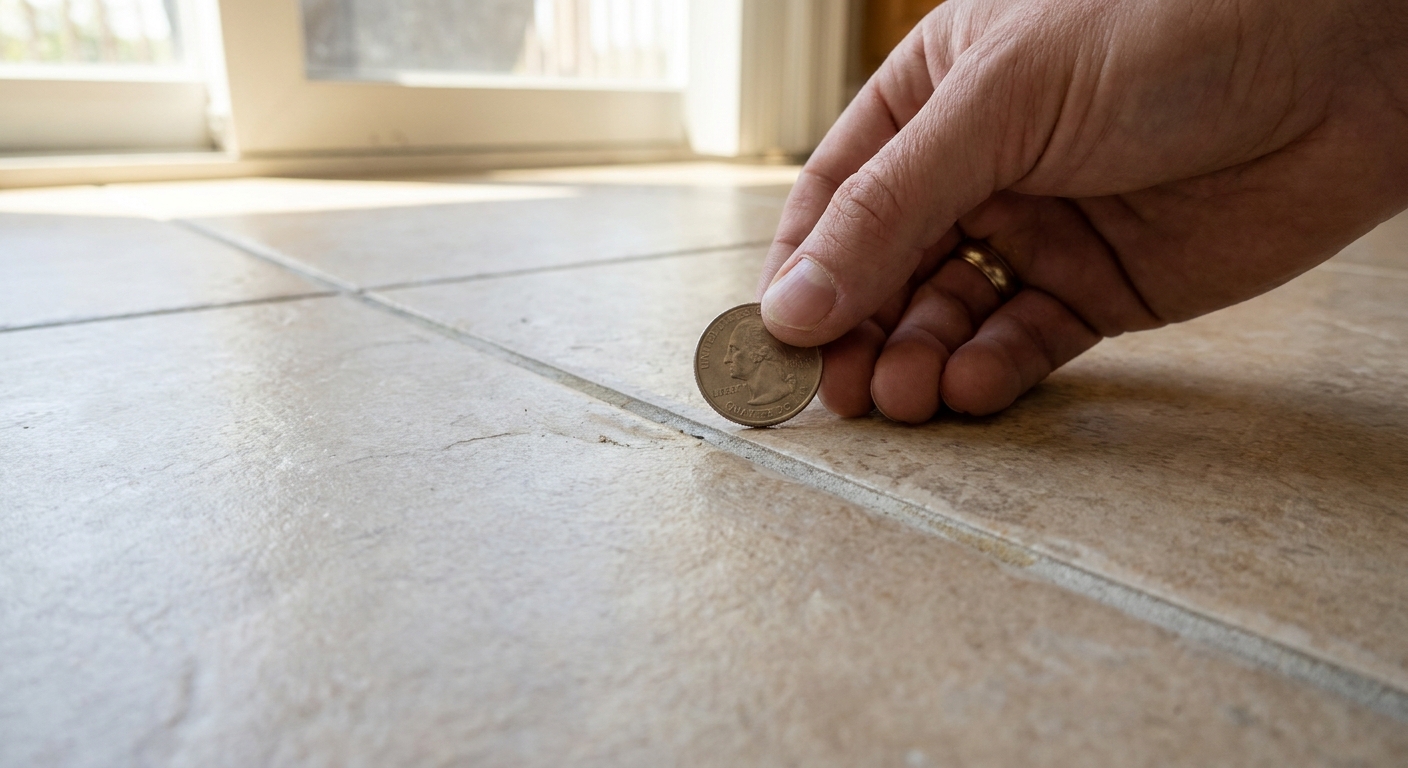
The coin test
Grab a coin (a quarter works well) and do this:
- Tap the tile in a grid. Start near a corner, tap about every 2 to 3 inches, then work across.
- Compare sound to neighboring tiles. A solidly bonded tile gives a sharper, tighter tick. A hollow area gives a lower thunk or drum.
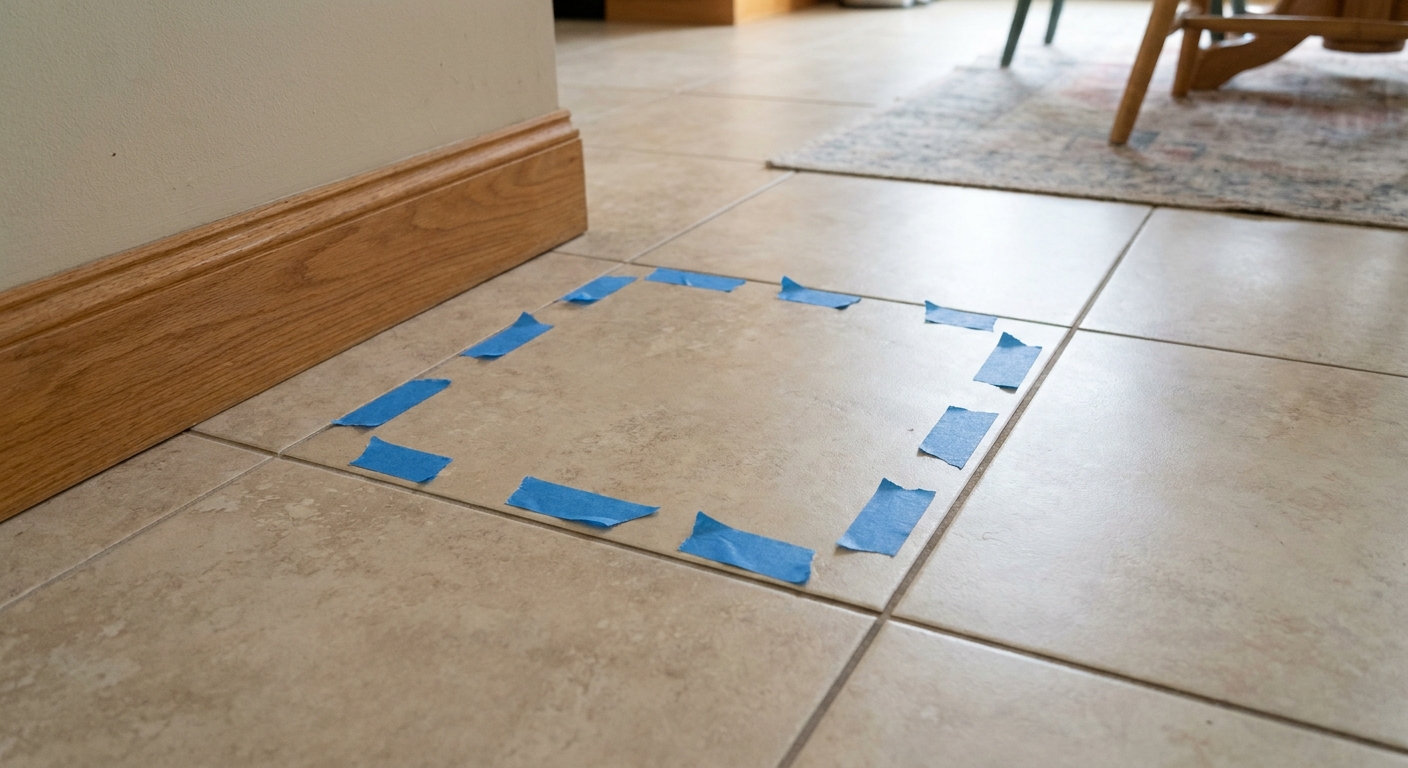
- Mark the hollow zone. Painter’s tape is perfect. Outline where the tone changes.
- Repeat across grout joints. This helps you see whether the issue is one tile, multiple tiles, or a strip that follows a crack or seam below.
The knuckle test
If you do not have a coin handy, your knuckle works. The sound is less crisp, but the change in tone is still noticeable. Use the same grid approach and compare to a tile you know sounds solid.
If the floor is textured or the tile has a heavy matte finish, the coin can scratch and skid. In that case, use your knuckle or the plastic handle end of a screwdriver.
Small void or released tile?
This is the key question. A small isolated void can stay stable for years in a low-stress spot. A fully released tile is basically floating, and you will often feel it as a tiny rock at a corner or a click underfoot. That is when cracking, grout failure, and rocking corners show up.
Signs it is a small void
- The hollow sound is limited to a small area, often near the center of the tile
- The tile does not move when you step on it
- Grout joints around it are intact, not crumbling or cracking
- No adjacent tiles show the same symptom
Signs it is debonded
- The hollow sound covers most of the tile, especially edges and corners
- The tile rocks or you can feel a tiny click underfoot
- Grout around the tile is cracking, powdery, or separating
- The hollow area spans multiple tiles in a line (often following a subfloor seam or slab crack)
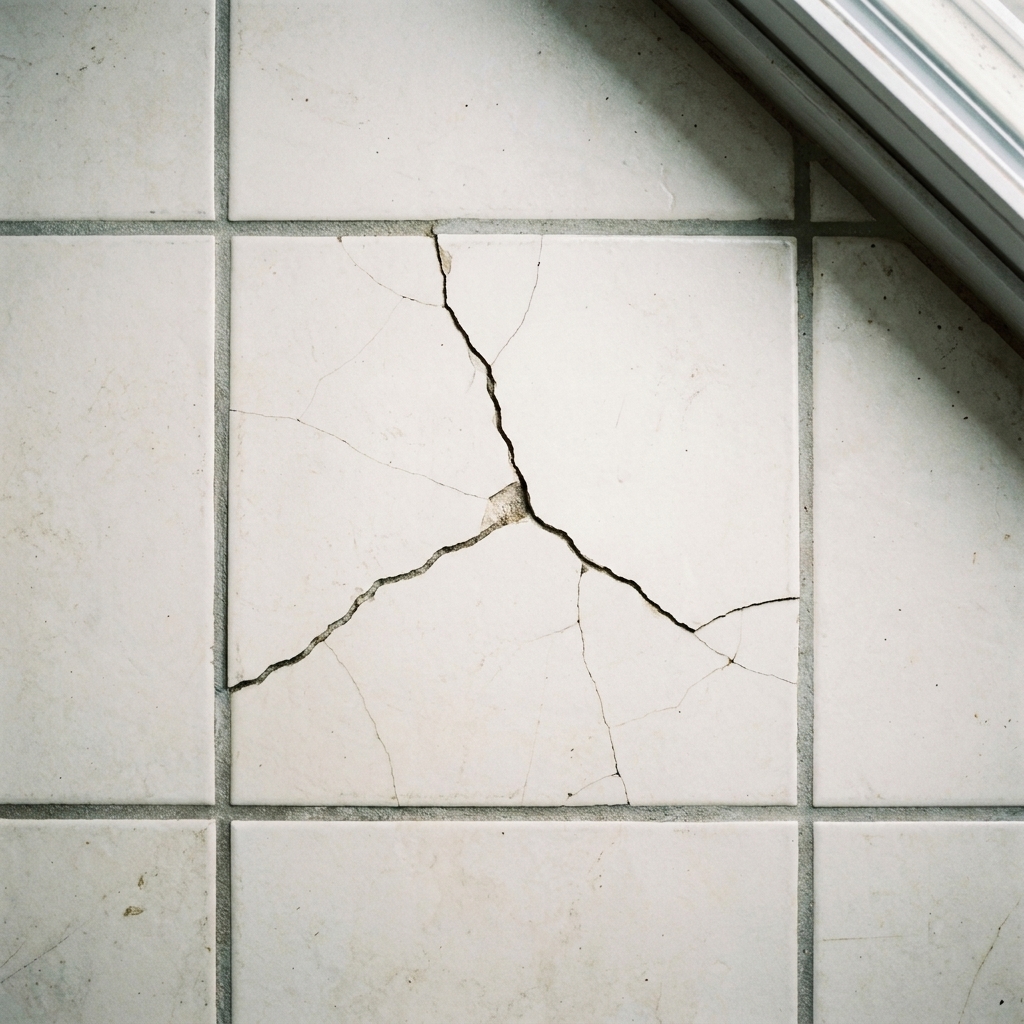
- You see a crack that runs through tile and grout, or repeated cracking in the same area after repairs
If you are unsure, do a simple pressure check: put a flat foot on the suspect tile and shift your weight gently from heel to toe. If you feel movement, that tile is not acting like it is bonded.
Why it matters
Unsupported tile behaves like a tiny trampoline. It flexes slightly under load. That flex might be microscopic, but it is enough to:
- Crack grout first, then tile later
- Let water work into the assembly in kitchens, entries, and baths
- Create a chain reaction where neighboring tiles start debonding as loads shift
Porcelain is strong in compression, but it is not forgiving when bent. The risk goes up fast if the hollow area is at an edge or corner because that is where loads concentrate.
What to do next
Here is how I make the call in the field. It is not about perfection. It is about risk.
Option 1: Leave it
Leaving it alone can be reasonable when:
- The tile is in a low-traffic area
- The hollow sound is small and centered
- There is no movement, no cracked grout, and no history of problems there
What I would do: Mark the date on a piece of tape under a cabinet toe-kick or in your notes, and retest in a month or two. If it is stable, check it again seasonally. Homes move with humidity and temperature changes.
Option 2: Monitor it
Monitor when the hollow area is moderate, or the location gets regular use, like in front of a sink or by a patio door.
What I would do:
- Do the coin test and tape-outline the hollow zone
- Photograph it so you can compare later
- Watch grout lines for hairline cracking or new gaps
- Avoid hard point loads for a while (high heels, ladder feet, heavy appliance wheels)
Option 3: Pull and reset
If any of the following are true, I lean strongly toward pulling the tile before it cracks:
- The tile rocks or clicks
- The hollow sound reaches edges or corners
- Grout is cracking around the tile
- Multiple neighboring tiles sound hollow
- The tile is in a high-traffic path
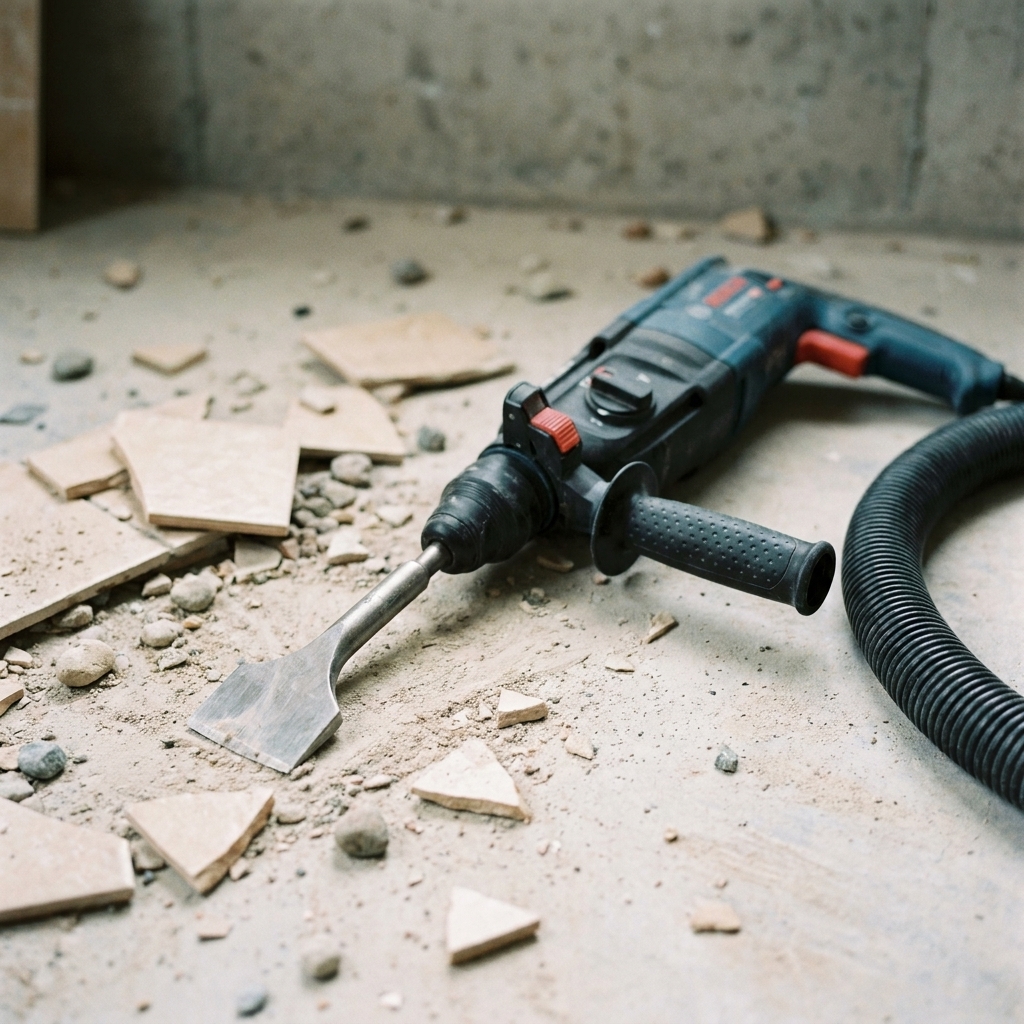
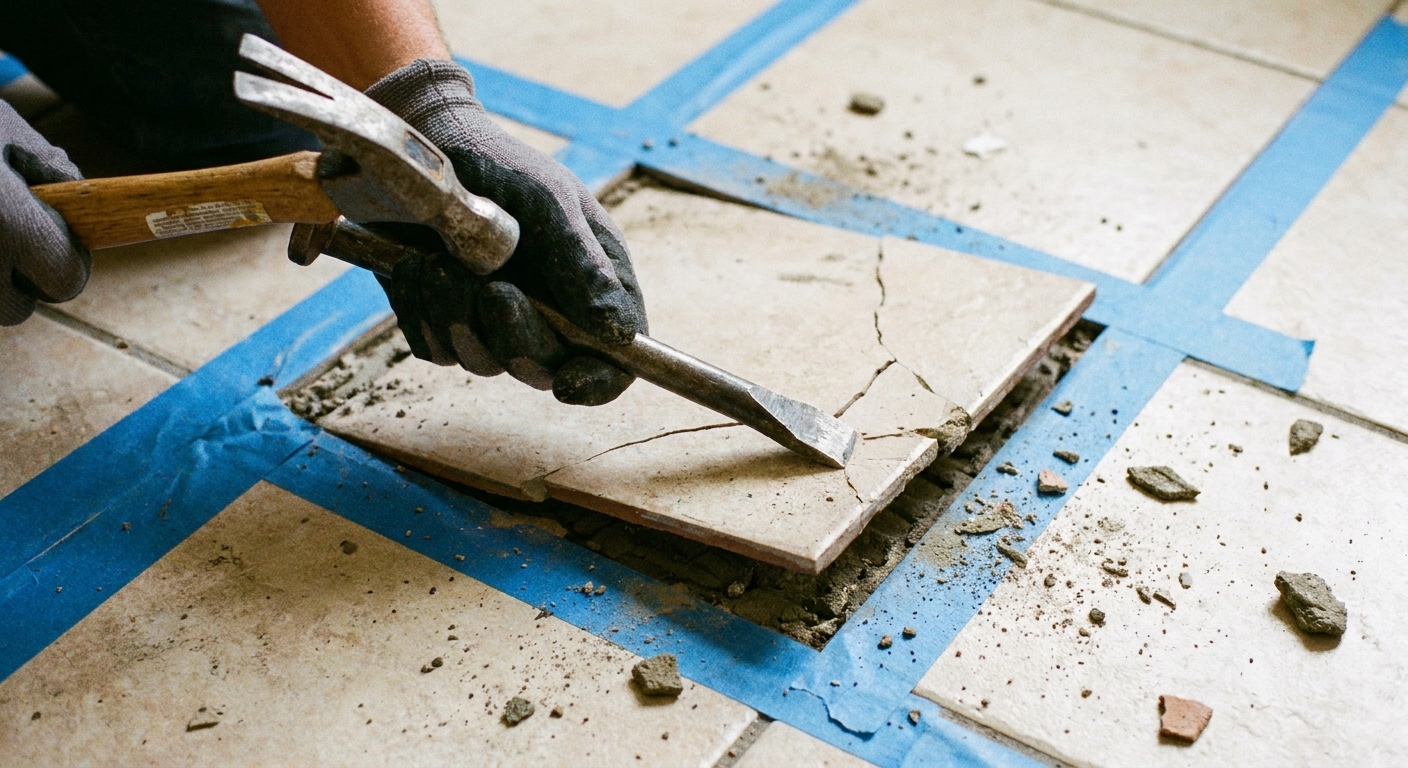
Why before it cracks matters: Once the tile breaks, removal usually gets messier, you risk chipping adjacent tiles, and matching a replacement can turn into a scavenger hunt.
If you reset it
I am not going to turn this into a full tutorial, but if you decide to pull and reset, this is the basic checklist I follow:
- Protect nearby tile. Tape edges, and work clean so one loose tile does not turn into three.
- Remove grout first. It reduces chipping risk at the edges.
- Lift the tile and look for clues. Mortar stuck mostly to the floor or mostly to the tile can point to coverage, skinning, dust, or primer issues.
- Check the substrate type. Wood subfloors raise movement questions. Concrete raises moisture and cracking questions. Uncoupling membranes change how failures look and what you need to repair.
- Fix flatness before you reset. If the floor is wavy, you will fight coverage no matter how good your technique is.
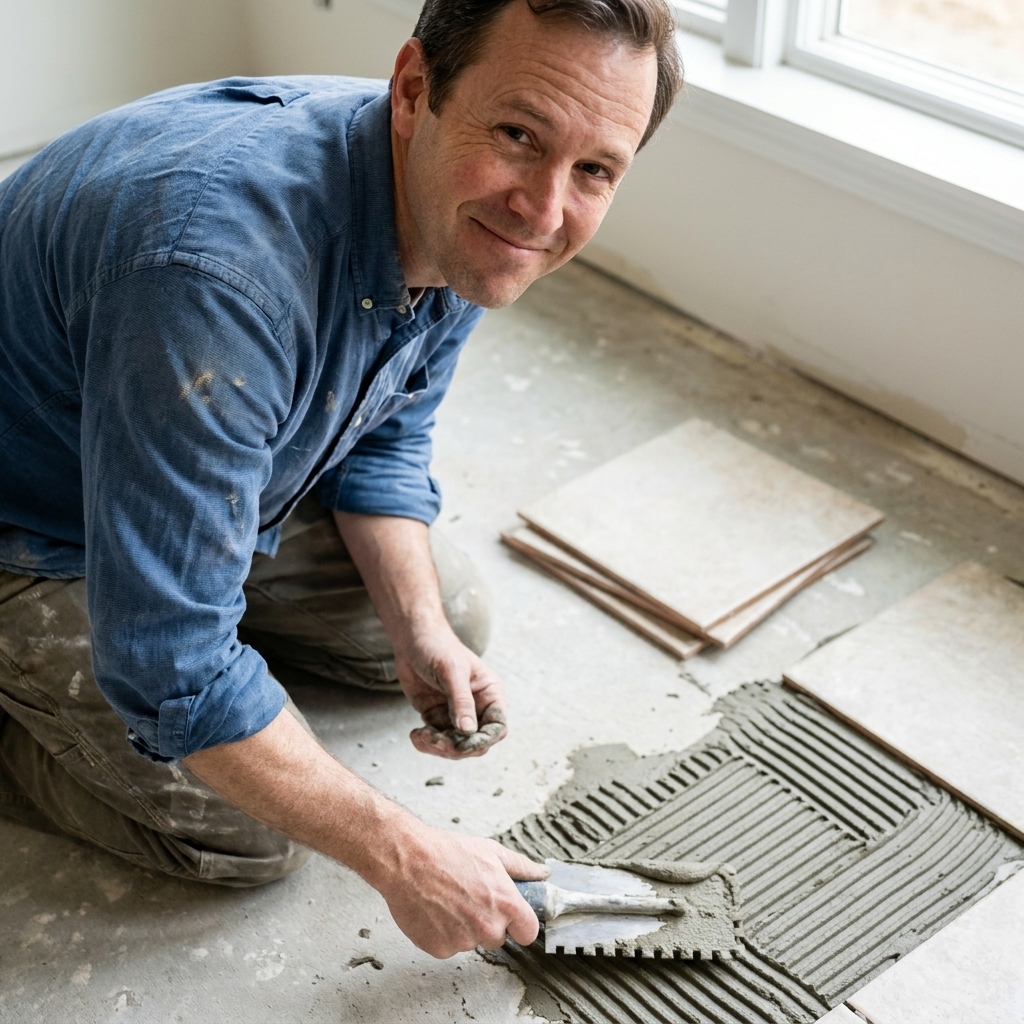
- Use the right trowel and technique. Key in mortar, comb in one direction, and back-butter when needed.
- Verify coverage. During install, lift a tile now and then and look at the transfer. It is the fastest way to catch a problem early.
When to call a pro
Some hollow tile is a nuisance. Some is a symptom. I would bring in a tile pro sooner rather than later if:
- You have widespread hollow areas, not just one tile
- Tiles are tenting or pushing up
- You see cracks that keep coming back after repairs
- There is any sign of moisture intrusion, staining, or swelling nearby
- The floor is over radiant heat and you suspect movement or bond failure
- You are not sure what the tile is installed over (wood, concrete, membrane) and the area is actively failing
Reality checks
Most hollow tile really is coverage or bonding. But I always rule out a couple of sneaky look-alikes.
Radiant heat and sound changes
Radiant heat can change how a tile assembly sounds because temperature affects expansion, contraction, and even how vibrations travel through the layers. A different pitch does not automatically mean failure, but any hollow area that is paired with movement or cracking still deserves attention.
Large format tile amplifies sound
Bigger tiles can sound more hollow even with decent coverage, simply because they act like a larger speaker. That is why the mapping step matters. You are listening for contrast compared to neighboring tiles.
Hollow grout or loose trim
Sometimes what you are hearing is a void under a grout joint, a loose metal transition, or a hollow spot in a patch underlayment. Tap the tile, then tap the grout joint, then tap the adjacent tile. Narrowing the source helps you choose the right fix.
FAQ
Can you inject adhesive instead of removing tile?
There are specialty injection repair approaches out there, and in the right conditions they can work, usually when the tile is not moving, the perimeter bond is still solid, and the void geometry is favorable. On floors, results are often inconsistent because you are trying to fill a thin, irregular void through a tiny access point. If the tile is already moving, injection typically does not restore proper support. In most homeowner situations, you are choosing between monitoring or resetting the tile correctly.
Does hollow tile always mean it was installed wrong?
Not always. Poor prep or coverage is common, but tiles can debond later from subfloor movement, moisture, or expansion issues. That is why it matters whether the hollow area is new, growing, or tied to cracks.
Will a hollow tile crack?
Sometimes yes, sometimes no. The biggest predictors are location (traffic), whether the void reaches edges or corners, and whether the tile moves. Movement is the red flag.
The bottom line
A hollow sound is your floor telling you it is not fully supported. Your job is to figure out whether it is a small, stable void or a tile that is separating from the mortar bed.
If it is small, centered, and stable, you can often leave it alone and keep an eye on it. If the hollow sound reaches edges, the tile rocks, grout is cracking, or multiple tiles are involved, pull it up and reset it before it breaks and turns a simple repair into a bigger one.
If you want, send yourself on a quick mission today: do the coin test, tape-outline the hollow zone, and take one photo. That tiny bit of prep work, my favorite kind, makes the next decision a whole lot clearer.