A clear timeline for when to grout after setting tile, plus real-world factors like cool temps and big tile. Also covers grout cure times and when floors can...
The Grout Nest
Published
How Long to Wait Before Walking on New Grout or Using the Shower
Fresh grout feels firm fast, but it stays fragile longer than most homeowners think. Here’s how long to wait for foot traffic, furniture, rugs, shower use, and sealing, by grout type.

Ben Mitchell
Ben Mitchell is a former professional tile setter and passionate home renovator with over 12 years of experience in the flooring industry. After stepping away from commercial contracting, he founded Grout Nest to empower everyday homeowners to tackle their own flooring, tile, and backsplash projects with confidence. He believes that with the right tools, proper prep work, and a little patience, anyone can achieve a professional-grade finish.
The first time I grouted a bathroom floor on my own, I did the classic rookie move: I “tested” it with my thumb every hour like a bored lab tech. By the next morning it felt hard, so I put the vanity back, slid a bath mat into place, and called it done.
Two days later I noticed hairline cracks at a few joints right where I had pivoted the vanity into position. The grout wasn’t defective. My timeline was.
Grout goes through two phases: it sets (feels firm enough to touch) and then it cures (gains its real strength and water resistance). This guide tells you what you can do when, for cement grout, premixed “ready-to-use” grout, and epoxy grout, on both floors and showers.
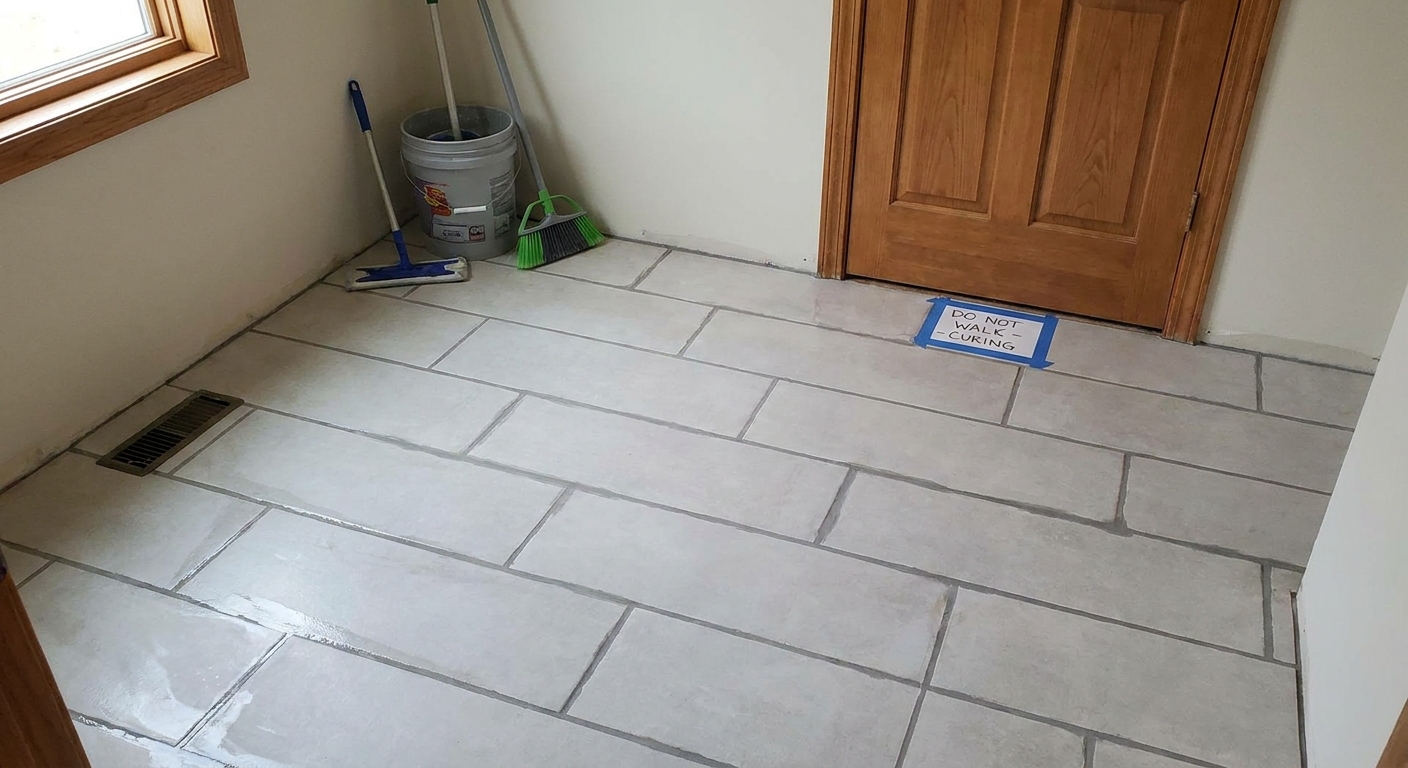
Quick answer: typical wait times
Always check your specific product label first. These are typical ranges I see when conditions are normal (about 70°F, average humidity, decent airflow). If your bathroom is cool, damp, or closed up, add time.
Tile floors
- Cement-based grout (sanded or unsanded): light foot traffic in 24 hours; furniture in 48 to 72 hours; rugs and floor mats in 3 to 7 days.
- Premixed grout (single-component, “ready-to-use”): light foot traffic in 24 to 48 hours; furniture in 72 hours+; rugs in 7 days+ (premixed needs drying, so it is slower under humid conditions).
- Epoxy grout: light foot traffic in 12 to 24 hours; furniture in 24 to 48 hours; rugs in 3 to 7 days (brand and temperature dependent).
Showers
- Cement-based grout: typically 48 to 72 hours before the first shower.
- Premixed grout: often 72 hours+ before the first shower, sometimes longer in high humidity.
- Epoxy grout: some products allow water exposure in about 24 hours, but others call for 48 to 72 hours. Verify on the label.
Important reality check: even when “first shower” is allowed, keep it gentle for the first week. No steam-room marathons, no blasting the joints with a handheld sprayer, and no leaving puddles to sit on the curb or floor.
One easy mix-up: grout vs thinset
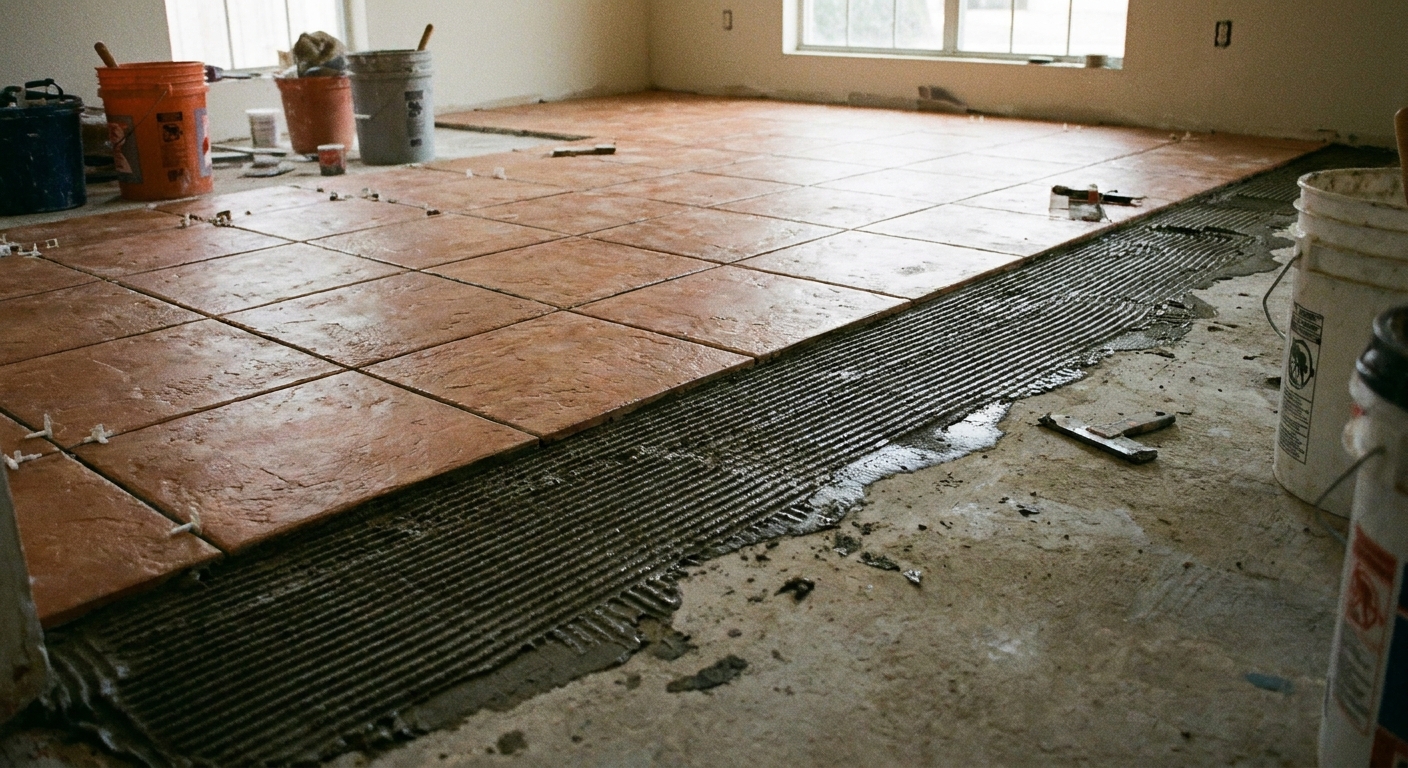
A lot of people (and more than a few DIY YouTube videos) treat grout cure like it is the only clock that matters. If your tile was just installed, your limiting factor might be the thinset mortar under the tile.
- Grout cure controls when the joints can handle traffic and water.
- Thinset cure controls when the tile itself can handle load without shifting, cracking grout, or breaking bond.
If you set tile yesterday and grouted today, be extra conservative with furniture and heavy traffic. The grout can be ready before the tile assembly is.
What changes the timeline
Grout cure time is not one fixed number. It depends on chemistry and conditions.
- Temperature: colder slows cure. Anything below about 60°F drags timelines out.
- Humidity and airflow: high humidity and poor ventilation slow drying, especially for premixed grout.
- Joint width and depth: wider, deeper joints take longer to firm up.
- Tile type: dense porcelain and glazed ceramic do not absorb much moisture, so grout can stay darker longer and take longer to firm up at the surface, especially in tight bathrooms with low airflow.
- Water exposure too soon: can weaken the surface, cause washout, or lead to blotchy color.
If you grouted late at night and the bathroom stayed closed up, assume you need more time than the “perfect conditions” number.
By grout type
Cement-based grout
Cement grout cures by hydration, meaning the cement chemically reacts with water and hardens over time. It can feel solid long before it reaches real strength. That is why it is easy to damage in the first couple days with twisting loads (pivoting, dragging, chair legs) even if it seems “dry.”
- Floors: keep traffic off for 24 hours, then walk gently in socks if you must. Wait 48 to 72 hours for furniture.
- Showers: give it 72 hours if you can. 48 hours is the bare minimum I like for most cement grouts.
Color note: cement grout can look lighter or darker in patches while it is still curing. Do not panic on day one. Let it finish.
Premixed grout
Premixed grouts are convenient, but they are the most misunderstood for cure time. Many of them cure largely by drying as water (and other carriers) evaporate and the binder coalesces. That means:
- They can take significantly longer in humid bathrooms.
- Deep joints or poorly ventilated showers cure slower.
- They may feel firm on top while still soft deeper in the joint.
If you used a premixed grout in a shower, treat the waiting period seriously. In my experience, rushing the first shower is where people get soft joints, dents, and a grout line that never seems to “fully harden.”
Epoxy grout
Epoxy grout cures by a chemical reaction between resin and hardener. It often reaches usable strength faster and is naturally stain and water resistant. The trade-off is that the working time is shorter and cleanup is pickier.
- Some epoxies allow earlier use than cement grout, but water exposure windows vary widely by product.
- Temperature still matters. Cold slows epoxy cure too.
- Even if it is ready for light use in 24 hours, heavy loads and rugs should still wait a few days.
Safety note: epoxy can be a skin sensitizer. Wear gloves, keep airflow moving, and follow the label for ventilation and cleanup.
Tile floors
When you can walk on it
For most cement grouts, I tell homeowners: no shoes for 24 hours. After that, light traffic is usually fine if you move carefully.
- Okay: walking straight across in clean socks, short trips, no pacing.
- Not yet: twisting on one foot, ladders, step stools with small feet, rolling toolboxes.
With premixed grout, assume 24 to 48 hours before walking, and lean toward 48 if the room is damp or closed up.
When you can move furniture back
This is where most DIY grout gets damaged. Furniture loads are not just “weight.” They are point loads at legs and shear forces when you slide or pivot.
- Cement grout: wait 48 to 72 hours. Use felt pads. Lift, do not drag.
- Premixed: wait 72 hours+ and longer if you have any doubt.
- Epoxy: often 24 to 48 hours, but still lift instead of slide. Check your product.
Contractor trick: if you have to move something heavy, lay down clean plywood sheets and slide the item over the plywood. You reduce point loads and you are not grinding grit into soft joints.
When you can put down rugs and bath mats
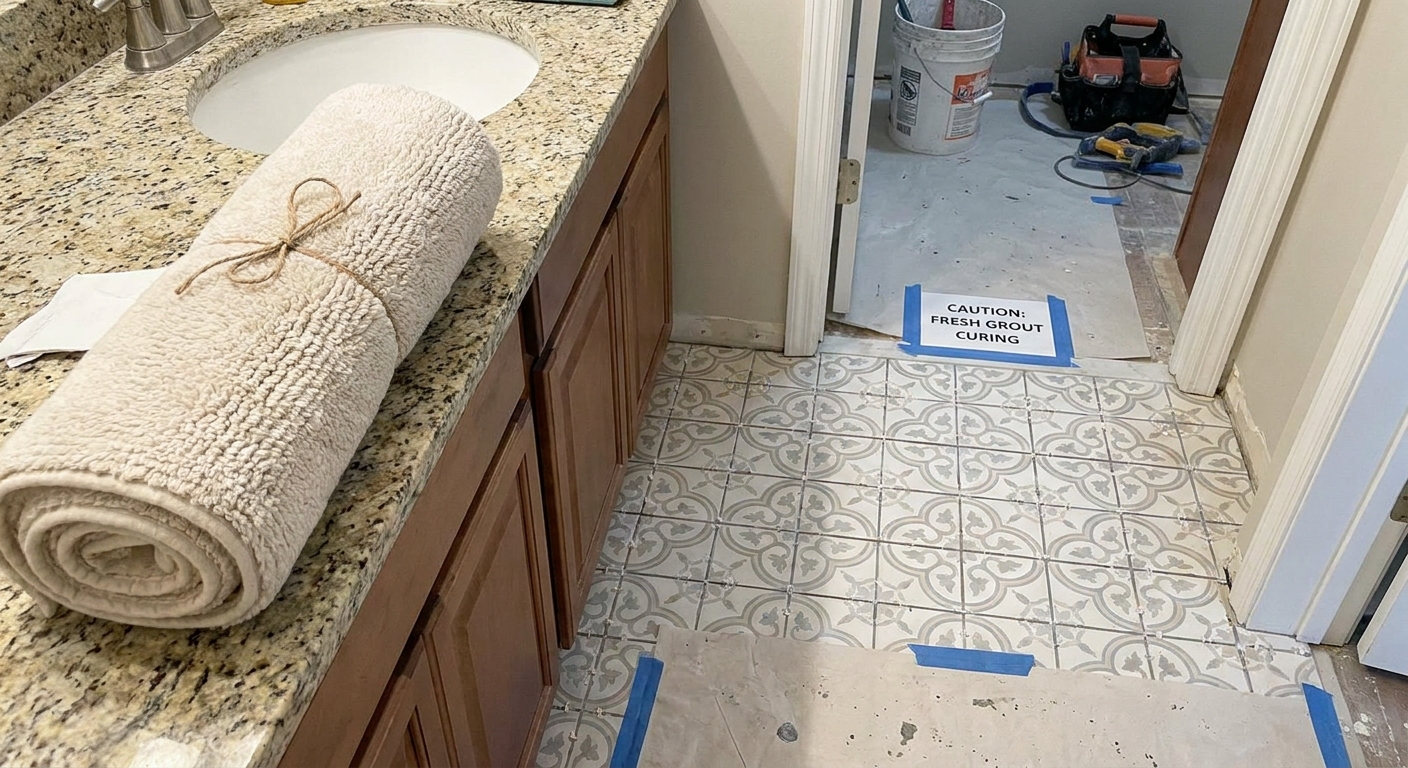
Rugs trap moisture and slow curing. They also can imprint backing patterns into grout that is still green.
- Cement grout: wait 3 to 7 days.
- Premixed: wait 7 days+ (especially in bathrooms).
- Epoxy: wait 3 to 7 days.
Showers
When you can shower again
Early water exposure is when fresh joints are most vulnerable to surface softening, washout, discoloration, and uneven curing. It also sets you up for longer-term issues if the grout never gets a proper chance to harden and dry out.
- Cement grout: 48 to 72 hours before the first shower. I prefer 72 when possible.
- Premixed grout: 72 hours+, and longer if your bathroom stays humid.
- Epoxy grout: some allow water exposure around 24 hours, others want 48 to 72 hours. Follow the label and cure schedule for your temperature.
If you have to shower sooner
If you absolutely have to, keep it as gentle as possible and treat it like a campground shower:
- Keep it short and lukewarm.
- Avoid direct spray at corners, niches, and the shower floor perimeter.
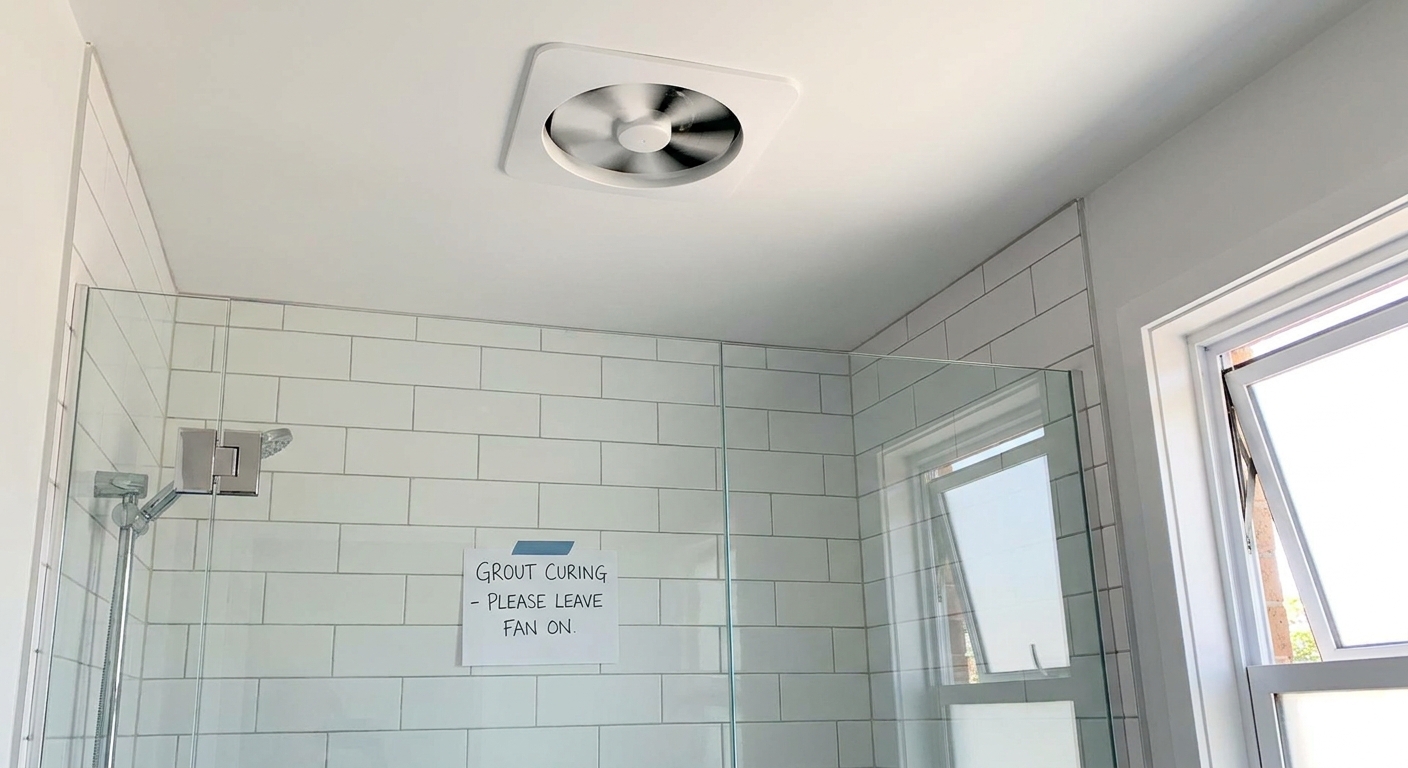
- Run the exhaust fan during and for at least 30 minutes after.
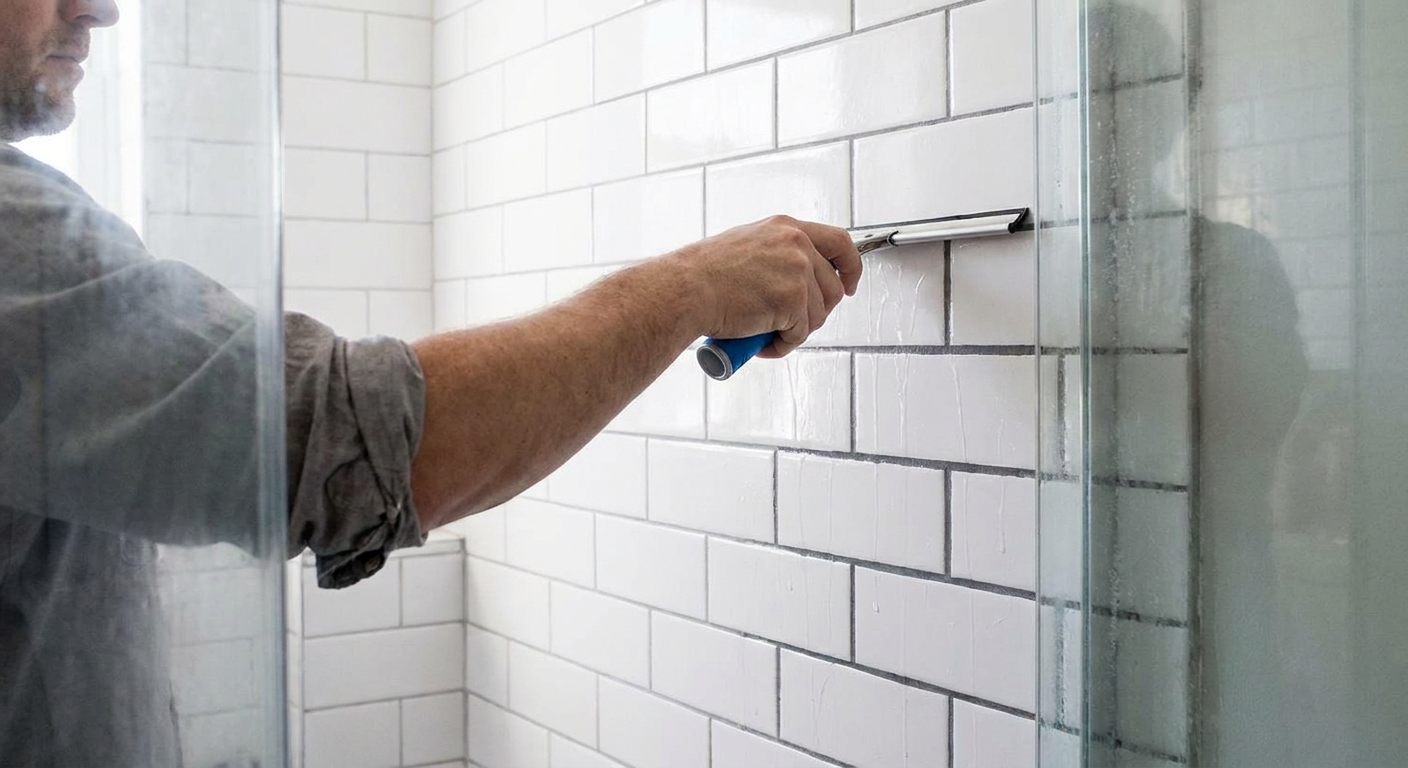
- Squeegee the walls and curb so water is not sitting on fresh joints.
When it is back to normal use
For cement grout, I like 7 days before the shower is back to normal life: hot showers, kids splashing, handheld sprayer abuse, and doors closed afterward. Premixed can also take about a week or more. Epoxy is often ready sooner, but again, follow the product directions.
When can you seal grout?
Sealing is for cement-based grout and some cementitious specialty grouts. Most epoxy grouts do not need sealer. Many premixed grouts also do not require sealing. The only correct answer is the label for your grout and sealer combo.
Cement grout: when to seal
A conservative rule is at least 72 hours, and many manufacturers prefer 7 days (sometimes longer for polymer-modified grouts or cool, damp rooms). If you seal too early, you can trap moisture and end up with blotchy color or a sealer that does not bond well.
After sealing, when can it get wet?
Most penetrating sealers need time to flash off and cure. A safe rule is 24 hours before water exposure, unless the sealer label gives a different number.
My practical advice: if this is a shower, I would rather you wait longer and seal once the grout is clearly cured than rush the sealer and create a moisture sandwich.
Grout haze and efflorescence
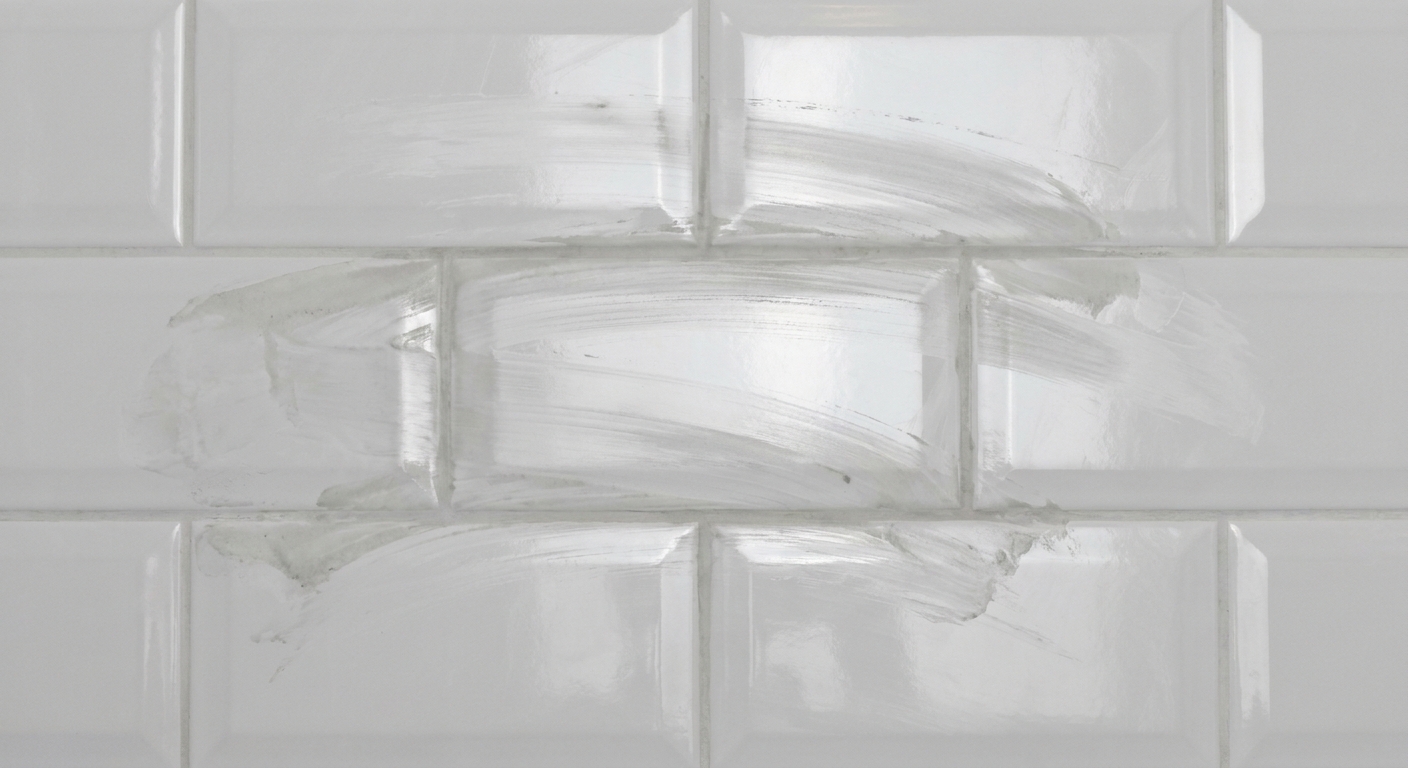
If your grout looks cloudy on the tile face or you see a light, chalky film, you are not alone. Two common culprits are grout haze (leftover residue) and efflorescence (salts migrating to the surface as moisture moves through cement grout).
- Do not acid-wash too early: give cement grout time to firm up and follow the grout maker’s cleaning guidance.
- Go gentle first: start with water and a nylon scrub pad once things are set, then use a manufacturer-approved haze remover if needed.
- Prevent it next time: do not over-wet the sponge during cleanup, and do not flood the joints.
How to tell grout is still too soft
You do not need fancy tools to spot grout that is not ready. You just need to look and gently test in a smart way.
Warning signs
- Dents or thumbprints: if you can leave a mark with light pressure, it is not ready for traffic or water.
- Powdery surface: light dusting can be normal on cement grout, but if the joint is sandy and crumbles when rubbed, something is off or it is still very green.
- Dark, damp-looking joints that never lighten: often slow drying, common with premixed grout in humid rooms.
- Edges pulling away from tile: can happen if grout is disturbed early, washed out, or mixed too wet.
- Sticky or rubbery feel (premixed): indicates it has not fully dried through.
A safe test
Pick a low-visibility spot and press a fingernail gently into the grout.
- If it leaves a groove, wait longer.
- If it only burnishes slightly without digging in, you are closer.
Do not do this test in ten different places. One or two discreet joints is plenty. I have seen more damage caused by nervous “checking” than by normal use.
Mistakes that ruin fresh grout
- Dragging furniture instead of lifting it.
- Putting down a bath mat the same day because “it looks dry.”
- Taking a hot, steamy shower right after grouting a small bathroom with poor ventilation.
- Over-washing during cleanup and weakening the top of the joint, then walking on it early.
- Sealing too soon and trapping moisture.
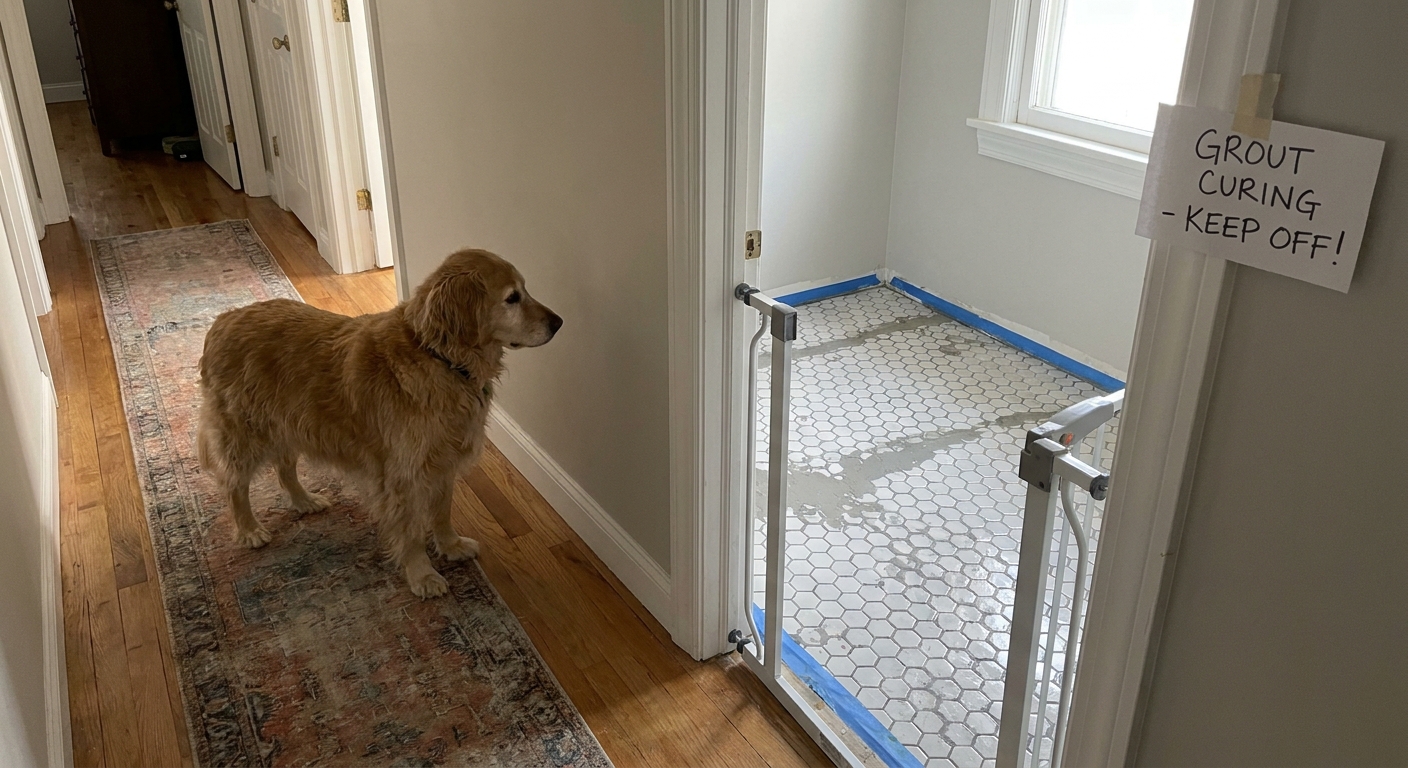
If Barnaby, my golden retriever, is involved, add: one enthusiastic zoomie lap across the bathroom. Keep pets off fresh grout entirely until you are past the first walk-on window.
FAQ
Can I sleep in the room after grouting?
Yes. Most grouts are low odor once installed, but keep the area ventilated. If you used epoxy or any strong cleaners, follow the product safety guidance and keep airflow moving.
Does grout cure faster with a fan?
A fan and exhaust ventilation can help premixed grout more because drying is part of the cure. For cement grout, airflow helps the room shed humidity, but it does not magically turn 24 hours into 8.
What if my grout got wet too soon?
If it was a small splash and you wiped it up immediately, you are probably fine. If you showered and the joints softened, smeared, or changed color dramatically, let everything dry fully for several days. If the grout becomes crumbly or recessed, the fix is usually to remove the compromised grout depth and regrout those areas.
When is grout fully cured?
Many cement grouts reach a full cure around 28 days in the technical sense, similar to concrete, but they are typically serviceable far earlier. For showers and heavy use areas, that first week is the big one.