A tile setter’s short list of must-have DIY tile tools, with practical tips on when and how to use each one for straighter lines, flatter surfaces, and few...
The Grout Nest
Updated October 17, 2026
Wet Saw vs. Manual Snap Cutter
Wet saw or snap cutter? Learn which tile cutting tool you actually need based on tile material, cut types, budget, and project size, with real DIY guidance.

Ben Mitchell
Ben Mitchell is a former professional tile setter and passionate home renovator with over 12 years of experience in the flooring industry. After stepping away from commercial contracting, he founded Grout Nest to empower everyday homeowners to tackle their own flooring, tile, and backsplash projects with confidence. He believes that with the right tools, proper prep work, and a little patience, anyone can achieve a professional-grade finish.
If you are standing in the tool aisle wondering whether you need a wet saw or if a manual snap cutter will get you across the finish line, you are not alone. I have owned both, borrowed both, and once tried to “make do” with the wrong one on a Saturday afternoon. That is the kind of decision that turns a tidy tile project into a pile of sharp little regrets.
Here is the good news: most DIY projects do not require owning a full workshop. The right cutter depends on three things: tile material, the cuts your layout demands, and how much tile you are cutting. Let’s make the call the same way I would if I were standing next to you in your garage, coffee in hand, trying to keep Barnaby from stepping on your spacers.

The quick verdict
- Choose a manual snap cutter if you are mostly making straight cuts in ceramic or some porcelain (with a quality cutter and a tile that snaps cleanly), your tile is not overly textured, and your project is a floor or wall with lots of repetitive trimming.
- Choose a wet saw if you need L-cuts, notches, thin rips on tough porcelain, mitered edges, stone (marble, travertine, slate), glass, or you want the most forgiving tool when your cuts must be clean and chip-free.
If you are torn, a good rule is this: a snap cutter is faster for simple straight production cuts, but a wet saw is more capable when the layout gets real.
How each tool cuts tile
Manual snap cutter (score-and-snap)
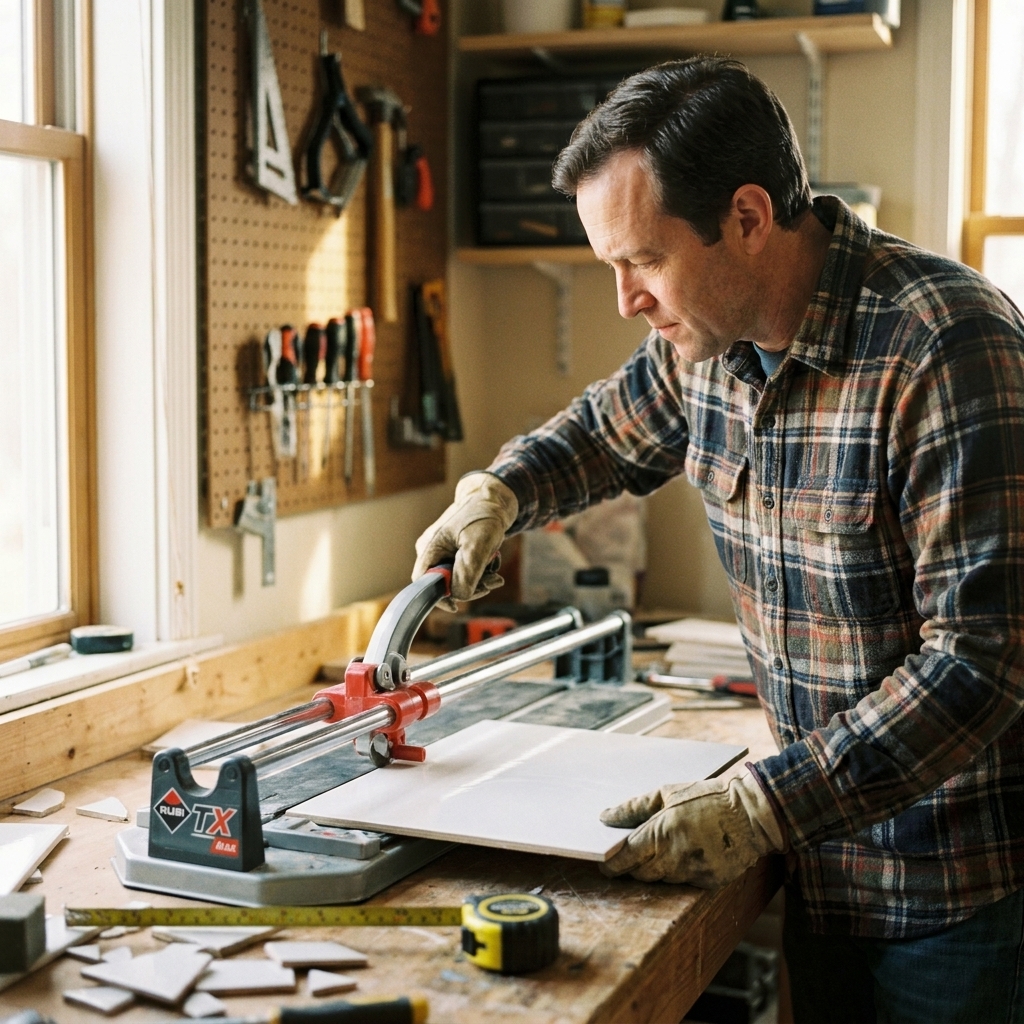
A snap cutter uses a small scoring wheel, typically tungsten carbide, to score a line across the glaze, then a pressure foot “snaps” the tile along that score. When everything is set up right, it is quick, quiet, and clean.
- Best at: fast straight cuts, repetitive cuts, many floor tiles in a row
- Struggles with: tiny slivers, notches around jambs, U-shapes, thick textured tile, some very hard porcelain
Wet saw (diamond blade + water)
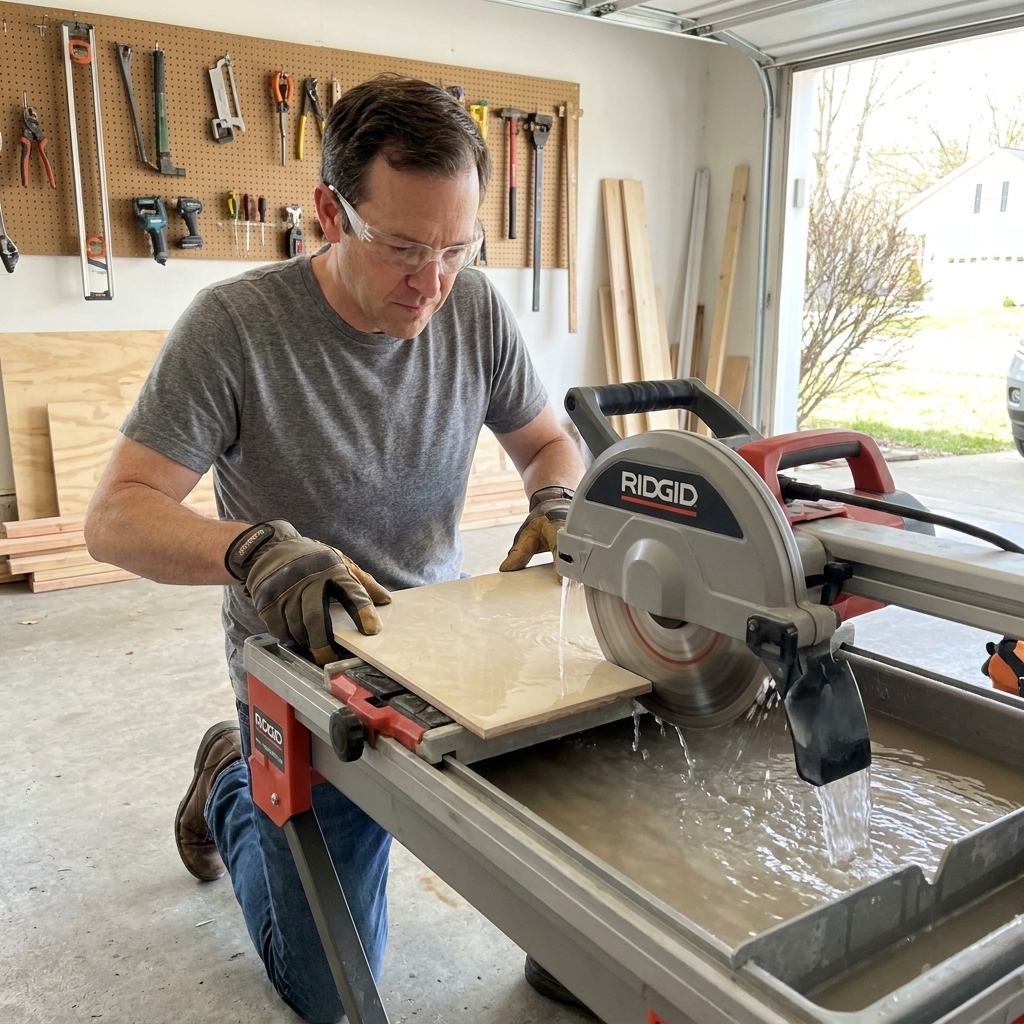
A wet saw uses a diamond blade and water to cool the blade while it cuts and to keep most silica dust out of the air. It cuts rather than snaps, which is why it can handle more materials and more cut types. You still get slurry and fine particles, so PPE and smart setup still matter.
- Best at: hard porcelain, natural stone, glass (with the right blade), miters, notches, accuracy work
- Struggles with: being tidy indoors (even with splash guards), setup time, cheap saws that wander or chip
Tile material: the big decider
If you only remember one section, make it this one. The harder and denser the tile, the more you should lean wet saw. When you are unsure, check the manufacturer notes, look for hardness and wear guidance (often tied to PEI for glazed tiles), and do a couple of test cuts on scrap before you commit to a whole-room plan.
Ceramic
- Snap cutter: Almost always yes. Ceramic is the snap cutter’s happy place.
- Wet saw: Nice to have for notches and tricky cuts, but not mandatory for many ceramic jobs.
Porcelain
Porcelain is where things get interesting. Some porcelain snaps beautifully. Some porcelain laughs at your snap cutter and breaks wherever it feels like.
- Snap cutter: Works well with a sturdy cutter and a fresh scoring wheel, especially on standard thickness field tile that test-snaps cleanly.
- Wet saw: Recommended for very hard, large-format, thick, or heavily textured porcelain, and whenever chipping becomes a problem.
My porcelain rule: If the tile is large-format, thick, textured, or marketed as dense and heavy-duty, I plan on a wet saw being involved at least for the harder cuts. Labels like “rectified” or “through-body” can show up on all kinds of porcelain, so I do not treat them as automatic wet saw signals. I treat them as a hint to slow down, test-snap a couple pieces, and keep a wet saw option in my back pocket.
Natural stone (marble, travertine, slate, granite)
- Snap cutter: Almost never recommended. Stone does not snap predictably and you can waste expensive tile fast.
- Wet saw: Yes, with a blade intended for stone and a gentle feed rate.
Glass tile
- Snap cutter: Usually no. Glass tends to chip and fracture.
- Wet saw: Yes, but use a glass-rated diamond blade and go slow.
Mosaic sheets
Mosaics are their own weird little world.
- Snap cutter: Sometimes works if the cutter has a supportive bed and the mosaic is mounted on a rigid backer. Many do not.
- Wet saw: Often easiest, especially if you sandwich the sheet between scrap tile or use a mesh support tray to prevent pieces from diving into the blade gap.
Cut types: what your layout needs
Most tool regret comes from underestimating cut variety. A basic grid floor still has door jambs, toilet flanges, baseboard returns, and that one corner that is never square.
Straight cuts
- Snap cutter: Fastest option for piles of straight cuts once you get your rhythm.
- Wet saw: Accurate, but slower per cut and you will be managing water.
Thin rips and slivers
These are the cuts that separate a calm DIY day from a spiral.
- Snap cutter: Can struggle with thin strips. The tile may shatter instead of snapping cleanly.
- Wet saw: Much better for consistent thin rips, especially in porcelain.
L-cuts, U-cuts, and notches (door jambs, outlets, cabinets)
- Snap cutter: Generally no. This is where snapping stops being fun.
- Wet saw: Yes. You make plunge cuts, multiple passes, or relief cuts, then clean up the corner.
Holes (pipes, shower valves)
Neither tool is the hero here. You typically need a diamond hole saw or, in some cases, an angle grinder with a diamond blade.
- Snap cutter: No.
- Wet saw: Can help nibble out openings with careful plunge cuts, but a hole saw is cleaner and safer.
Miters and bevels
- Snap cutter: No.
- Wet saw: Yes, if the saw tilts or you use a miter guide. This is key for curb caps, niches, and outside corners when you want that crisp “stone slab” look without metal trim.
Speed, mess, and learning curve
Snap cutter: fast and clean
A snap cutter is the tool I grab when I am doing a straightforward floor with ceramic or friendly porcelain. It is quiet. It makes almost no dust. It can live right in the room you are working in. The learning curve is mostly about consistent scoring pressure.
- Common beginner mistake: pressing too hard on the score, then getting chips or a wandering line
- Pro tip: score once, firmly and smoothly. No back-and-forth “sawing.”
Wet saw: more setup, more capability
A wet saw takes time to set up, fill, square, and keep clean. It also sprays water and creates slurry, so it usually lives outside or in a garage. If you must cut indoors, plan for containment: a tarp, a big mixing tray, towels, and a wet vac for cleanup.
- Common beginner mistake: forcing the tile through the blade, which causes chipping and blade deflection
- Pro tip: let the blade do the work. If chipping suddenly increases, the motor starts to bog, the blade slows, or you see steam at the cut, you are pushing too fast or your water flow is weak.
Accuracy and edge quality
If you are tiling a backsplash with exposed edges, a shower niche, or anything where the cut edge is visible, edge quality matters.
Snap cutter edge quality
On ceramic, the snap edge is often clean enough to hide under trim or grout. On porcelain, it can be crisp or it can look like it was chewed depending on the tile and the cutter.
When snap edges look rough: I keep a rubbing stone or diamond hand pad nearby and dress the edge lightly.
Wet saw edge quality
A wet saw can leave a very clean edge, but blade choice and technique matter.
- For porcelain: a quality continuous rim porcelain blade reduces chipping.
- For glass: use a glass blade and feed slowly.
- For stone: a blade rated for stone, and finish edges with pads if they will be visible.
Tile size and saw limits
This is the part the box rarely tells you in big friendly letters: not every saw, or snap cutter, can handle every tile size.
- Large-format tile (think 24x24, 24x48, and up): many DIY snap cutters are too short, and many small wet saws cannot rip the full length cleanly without awkward flip-cuts.
- When it matters: if your layout depends on long, clean rips or consistent miters, you may be better off renting a larger sliding-tray saw, using a rail cutter system, or paying a shop to cut the big pieces.
I am all for DIY, but wrestling a floppy 24x48 plank on a tiny saw is how you end up buying extra tile in a hurry.
Costs: buying, renting, and where to spend
Manual snap cutter costs
Snap cutters range from bargain models to heavy-duty cutters that can handle large-format porcelain. If you are cutting anything bigger than basic 12x12 ceramic, do yourself a favor and buy a cutter with a stiff rail and a smooth sliding carriage. Flexy cutters equal crooked breaks.
- Best value: midrange cutter with a known brand and replacement scoring wheels available
- Worth paying for: longer bed length for large tiles, strong breaking foot, adjustable fence that stays square
Wet saw costs
Wet saw pricing is all over the place. There are budget saws that will technically cut tile, and there are pro saws that cut straighter, chip less, and make you hate your life less.
- Budget reality: cheaper saws often have tray slop or weak fences. You can still get a good project done, but expect to measure carefully and check for drift.
- Where to spend: a decent blade, a fence that locks square, and a stable stand or table
Renting vs. buying
If you only have a weekend project and you need a wet saw for a handful of cuts, renting can be smart. If you are doing a bathroom, then a kitchen, then a laundry room, buying starts to look better fast. I also like the option of taking my time because rushing tile is how you end up with “creative” grout lines.
Real-world picks
Small kitchen backsplash with ceramic subway tile
- My pick: snap cutter for most cuts, plus tile nippers or an angle grinder for oddball pieces
- Wet saw? Only if you have lots of outlet notches or you are using porcelain or glass
Bathroom floor with 12x24 porcelain
- My pick: wet saw, or snap cutter plus wet saw backup
- Why: long rips, thin slivers at walls, and hard porcelain can punish a snap-only plan
Shower walls with marble or travertine
- My pick: wet saw, no question
- Why: stone cuts, miters, niches, and edge quality all matter
Entryway floor with basic ceramic
- My pick: snap cutter
- Why: speed, low mess, plenty of straight cuts
Herringbone or lots of angled cuts
- My pick: wet saw
- Why: repeatable angles and cleaner edges. Herringbone is already enough of a personality test.
Why many DIYers use both
If you want the honest “contractor brain” answer, it is common to use a snap cutter for speed and keep a wet saw for problem-solving. On a bigger floor, I will snap 80 percent of the straight cuts and wet saw the rips, notches, and any tile that looks at me funny.
If buying both is not in the cards, pick the one that covers your most difficult requirement, not the most common cut. Straight cuts are easy to outsource to a store or to do slowly. Notches in porcelain around a door jamb are where projects get stuck.
Choose in 60 seconds
- If your tile is ceramic and cuts are mostly straight: get a manual snap cutter.
- If your tile is porcelain and it is large, thick, textured, or just not snapping cleanly in tests: lean wet saw.
- If your tile is stone or glass: get a wet saw with the right blade.
- If you need notches, L-cuts, or miters: get a wet saw.
- If your project is big and repetitive: a snap cutter saves time and sanity.
Snap cutter tips
- Keep the tile tight to the fence before you score. Any wobble becomes a crooked snap.
- Score once, smooth and firm. Multiple passes chip the glaze.
- Snap with even pressure centered on the score line.
- Avoid tiny slivers when you can. Adjust your layout so perimeter cuts are at least half a tile when possible.
- Replace the scoring wheel if it starts skipping. Dull wheels create ragged breaks.
Wet saw tips
- Square the saw before you cut your “real” tiles. Check the fence and tray travel with a framing square.
- Use a good blade. A $30 to $60 blade can often make a cheap saw cut like a different tool.
- Support large tiles so they do not tip during the cut. Tipping causes chips and binding.
- Feed slowly at the end of the cut, where chipping loves to happen.
- Change the water when it turns into thick sludge. Dirty water increases chipping and wears pumps.
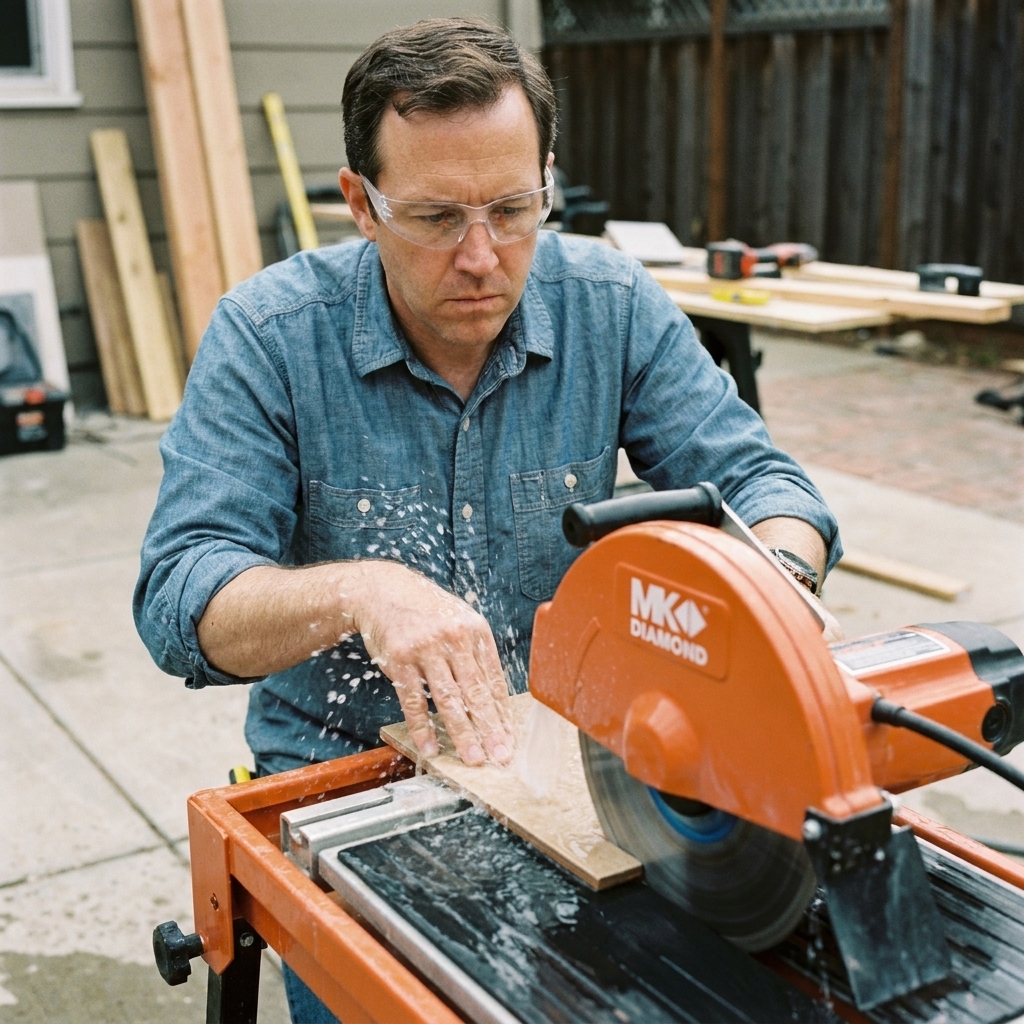
Safety notes
- Eye protection is non-negotiable with both tools. Snap cutters can launch tiny shards.
- Wet saws still need respect. Keep fingers away from the blade path and never reach across a moving blade.
- Electricity and water: use a GFCI outlet, keep cords out of puddles, and do not defeat safety features.
- Silica and slurry: wet cutting reduces airborne dust, but it does not make you invincible. Avoid indoor dry cutting, wear a respirator when you grind or when dust is present, and follow the tool and tile manufacturer guidance.
- Hearing protection is smart, especially with wet saws and grinders.
FAQ
Can a manual snap cutter cut porcelain?
Yes, many can. The question is whether your porcelain will snap cleanly. Dense, textured, very thick, or very large porcelain is more likely to chip or break off-line. If you are seeing inconsistent breaks, move to a wet saw for those cuts.
Do I need a wet saw for a backsplash?
Not always. Ceramic subway tile can be handled with a snap cutter for straight cuts. You may still want access to a wet saw if you have lots of outlet notches, use porcelain, or want super clean exposed edges.
What about using an angle grinder instead?
An angle grinder with a diamond blade is incredibly useful, but it is dusty and easier to chip edges with. I treat it as a specialty tool for notches, curves, and adjustments, not as a full replacement for a wet saw or snap cutter.
Is a cheap wet saw worth it?
Sometimes, especially for a one-off DIY project. The biggest downsides are tray play, fences that do not stay square, and more chipping. If you go budget, put money into a quality blade and take time to set the saw up square.
My bottom line
If your project is straightforward and your tile is ceramic or friendly porcelain, a manual snap cutter is the fastest, least messy way to work. If your tile is hard, expensive, or your layout has notches and details, a wet saw is the tool that keeps the project moving and the cuts looking intentional.
And whatever you choose, remember my least glamorous advice from a decade on my knees: prep work is 90 percent of the job. A perfect cut does not fix a bad layout line. Measure twice, dry-lay a few rows, then cut with confidence.